
Beverage Balance: What’s New With Fountain Beverage Dispensers
As IoT and automation trickle into the beverage world, manufacturers balance operators’ varying tastes.
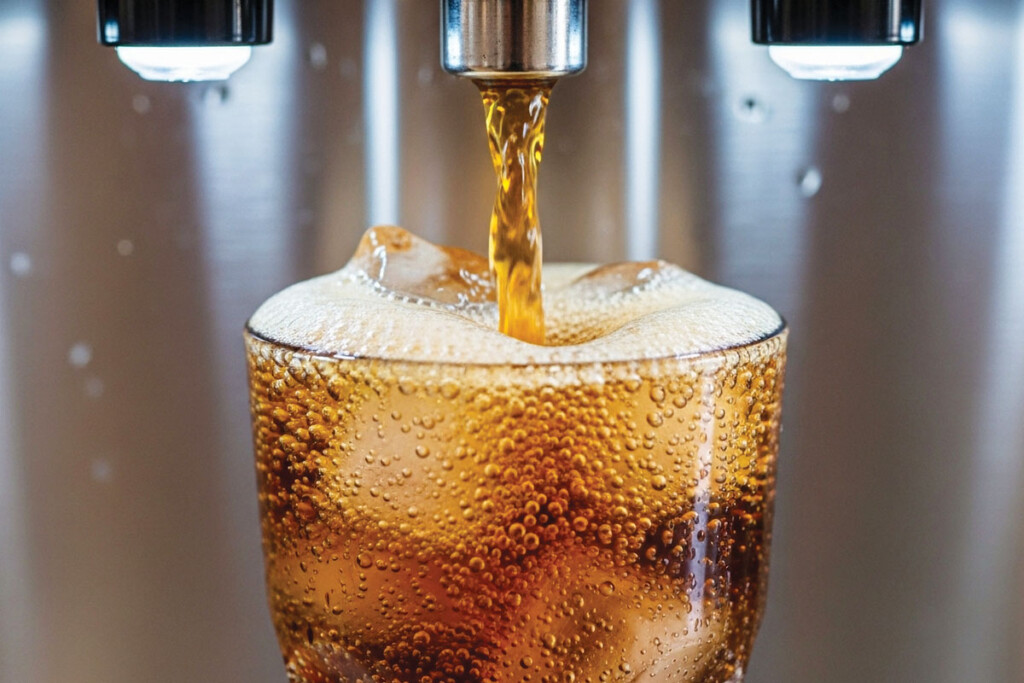
A thirst for more knowledge is noticeable in the beverage space, where data could potentially drum up more sales, among other perks.
IoT and automation, along with touchless dispensing options that came out of the pandemic, are a few newer innovations on fountain beverage dispensers, with some off-the-shelf models as well as custom collaborations between manufacturers and operators.
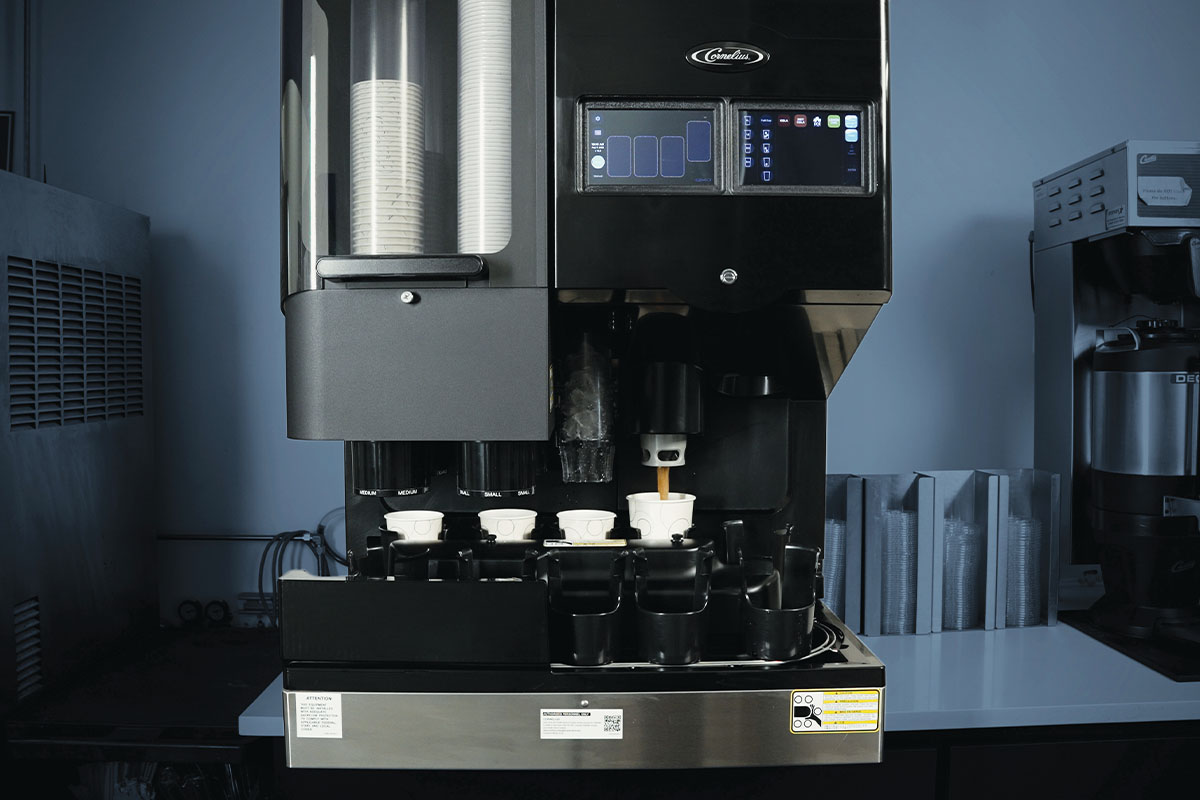
Select automated models integrate with the POS, adding built-in efficiency and accuracy alike. Courtesy of Cornelius.
An Evolving Niche
Benefits of available connected fountain beverage dispensers include predictive maintenance alerts/remote troubleshooting, insight into peak volume times and popular flavors, and the ability to update a digital display chain-wide (particularly appealing to convenience stores, one maker says). “It helps reduce downtime and improve operational efficiencies,” they say. Weigh your desire for these features against the higher costs they carry, in some cases including ongoing software subscription fees. While select operators are all in on IoT, it’s not for all. “There is still a big mix between people wanting IoT and those who just want a regular workhorse,” says one maker.
“There is still a big mix between people wanting IoT and those who just want a regular workhorse.”
In recent years, more automated models have been in development. Courtesy of Lab2Fab.
Some manufacturers also offer automated models—one of them able to drop a right-sized cup, ice and drink once a beverage order hits the POS. These can help with labor reallocation, drink consistency/accuracy and speed of service. Beverage automation is not new, per se; one maker’s automated collaboration with a big-name operator is two decades in, but more options exist today. Another automated model, also POS integrated and able to pour, label and seal up to 28 different drinks at a rate of up to 450 drinks an hour, debuted at the 2025 National Restaurant Association Show. As of press time, commercial availability was pending.
Step-by-Step
Before you go all in on the latest and greatest, size up your needs and goals. To do so, manufacturers recommend considering the following:
Product mix. How many different beverages do you want to offer? Narrowing your scope will help dictate the number of valves needed. “We all want everything and anything, and we’d love to put as many options out there as possible,” says one maker. “So, if you could put a machine with 16 or 20 flavors on it and have flavor shots and things of that nature on there, that’s all well and good. But if you’re a mom-and-pop restaurant that is just serving mainline products, you probably only need six to eight valves.” A multiflavor valve, offered by some, can up your variety without adding to your machine’s footprint, with some limitations. For example, one four-flavor valve can dispense noncarbonated offerings like lemonade, diet lemonade, pink lemonade and water, or carbonated offerings of choice, but not a mix of carbonated and noncarbonated products from the same valve. Another maker’s valve can dispense up to 12 products. Product capacities also can differ by machine type. One maker’s drop-in units top out at eight valves, whereas its ice-combo unit—where ice is dispensed vs. scooped from a drop-in bin—might have as many as 20 valves, they say. Also remember that your racking system grows along with your offerings, so be sure to account for that storage space as well.
Purchasing partner. Operators can typically work with either Coca-Cola or Pepsi to obtain fountain beverage dispensers, often with leasing options or incentives available, depending on syrup volume. But operators also can purchase from dealers or distributors, or direct from manufacturers, which may be of interest if they’re set on a specific model or feature, or if they want a custom collaboration. With any channel, one manufacturer recommends defining beverage program goals and giving equipment a test run prior to a full-portfolio rollout.
Placement. Multiflavor valves and automation tend to work best in the back-of-house, says one maker, as self-service interfaces and levers should be easy for customers to understand and navigate. ADA compliance also marks a top-of-mind need in the front-of-house. Ice dispensing, too, will need to be thought through. For example, an accidental specification of a front-of-house drop-in that requires a customer to scoop ice would prove troublesome from a sanitary standpoint, say makers, while staff can take on that task in the back. Cooling systems (ice cooled or mechanically cooled) and internal or external carbonators also can change the footprint of your equipment.
Volumes. Size up your drinks per day as well as per hour, accounting for peak volume times. A popular QSR-geared unit from one maker is rated for 420-600 drinks an hour. An undersized unit can dispense flat drinks as the unit struggles to keep cold and properly carbonate. “The colder the water, the better it captures the carbonation,” summarizes one maker. Meanwhile, an oversized unit can result in wasted syrups if products sit and run out of date.
Ice. Whether you want or need ice for your machine, consider preferred ice type as well as peak ice needs in sizing. “Right now, a lot of our customers are really driving toward chewable ice,” notes one maker with a line designed for the trend. “The machine itself has settings to agitate that ice, so they have auger systems that will move the ice through the dispenser, through the chute and smoothly dispense into the cup.” Select manufacturers of fountain beverage dispensers also manufacture ice machines, making it a one-stop shop, though customers can specify another brand’s ice machine if desired.
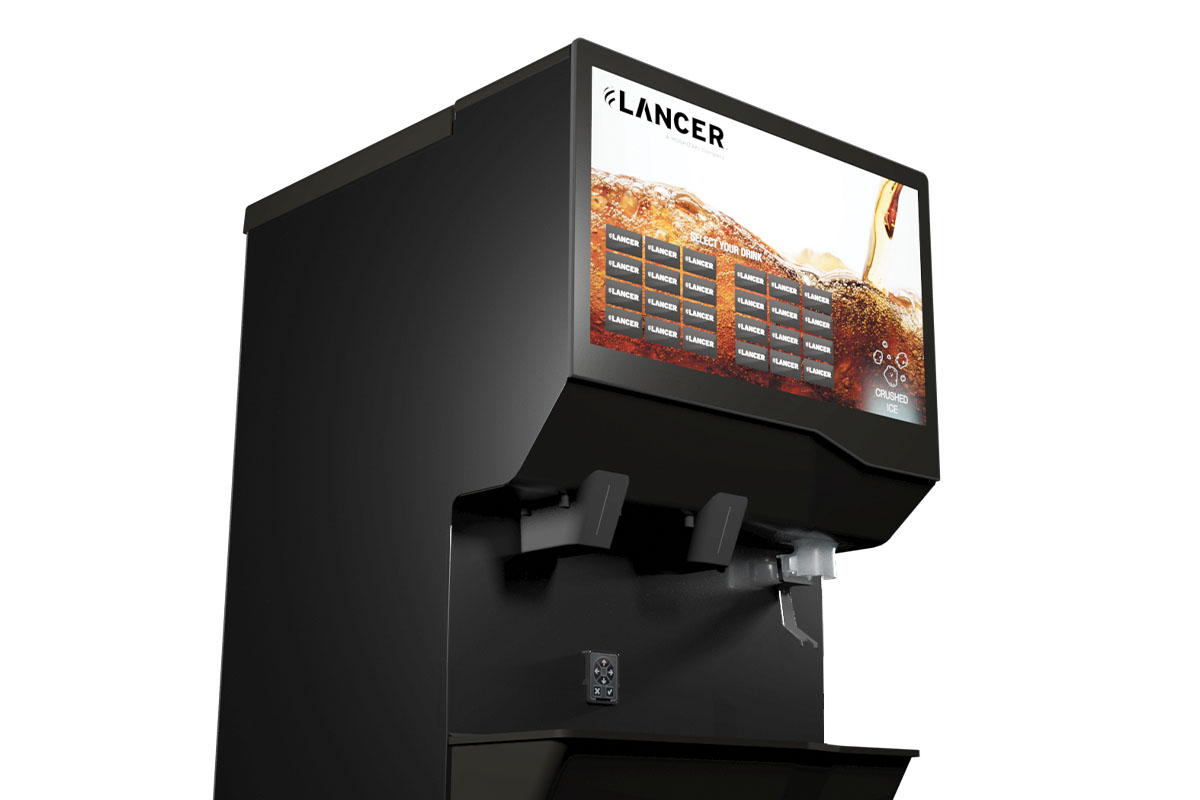
Multiflavor valves—some of which can dispense up to 12 products—can add variety to a fountain beverage dispenser in a compact format. Courtesy of Lancer.
Take Care
Once a fountain beverage dispenser is set up and calibrated by a professional, it typically needs minimal attention. Operators will want to keep up on preventive maintenance, including daily cleaning of nozzles, splash-prone areas and the exterior of the dispensing valves and ice chute. Monthly maintenance of the ice bin, if relevant, is recommended. Every six months, the syrup lines should be cleaned and sanitized, suggests one maker, though you’ll want to refer to recommendations for your specific unit.
Beyond regular upkeep, makers say the units are rather sturdy; one maker still stocks backup parts for a machine it discontinued in the 1990s, as there are still several in the field.
Whether you’re looking to tap into the newer wave of smart options or simply looking for the basics, manufacturers have a range of options at the ready.
Dispenser Fizz-ics
Look over five fountain beverage dispensers, with options for the front- and back-of-house, and then some.
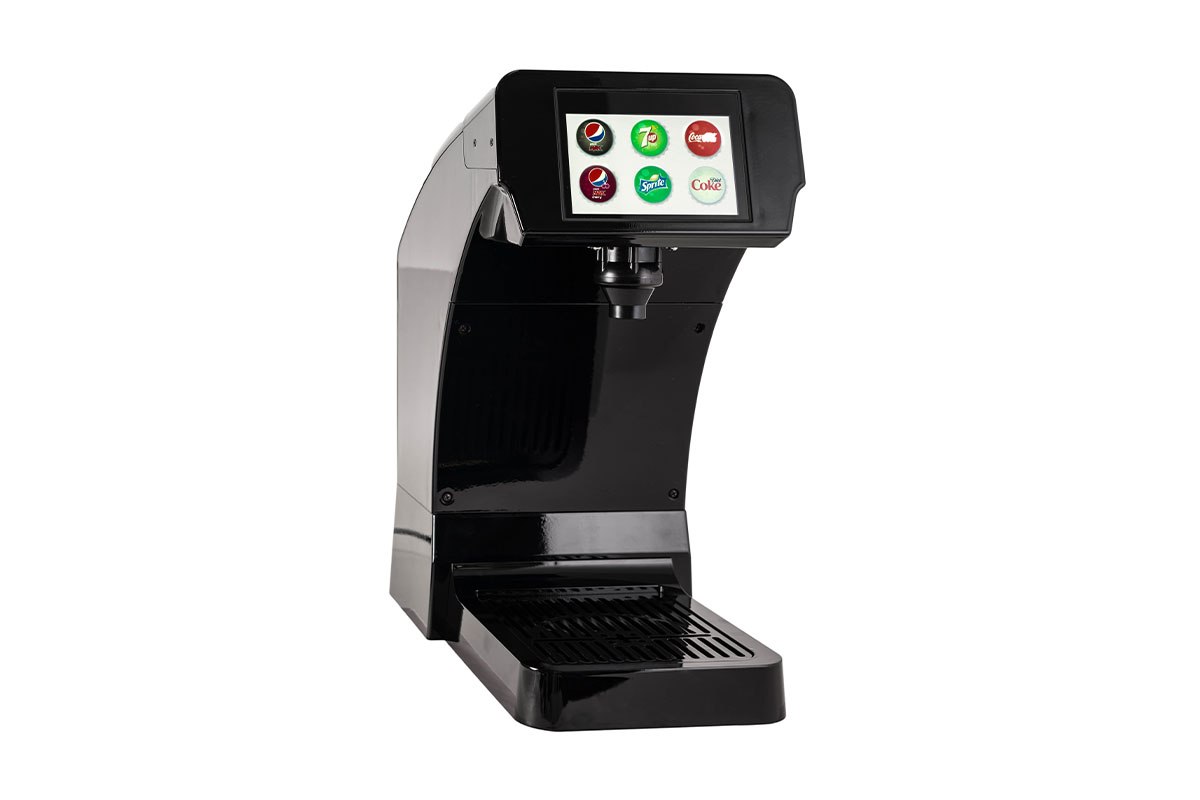
Wunder-Bar
Model: Mustang
Dimensions: 8-in.W x 13 1/2-in.D x 16-in.H
Details: The Mustang is compact and customizable for staff or customer-geared dispensing of up to 8 beverages of choice. A metered dispense setup keeps pours consistent.
Website: wunderbar.com
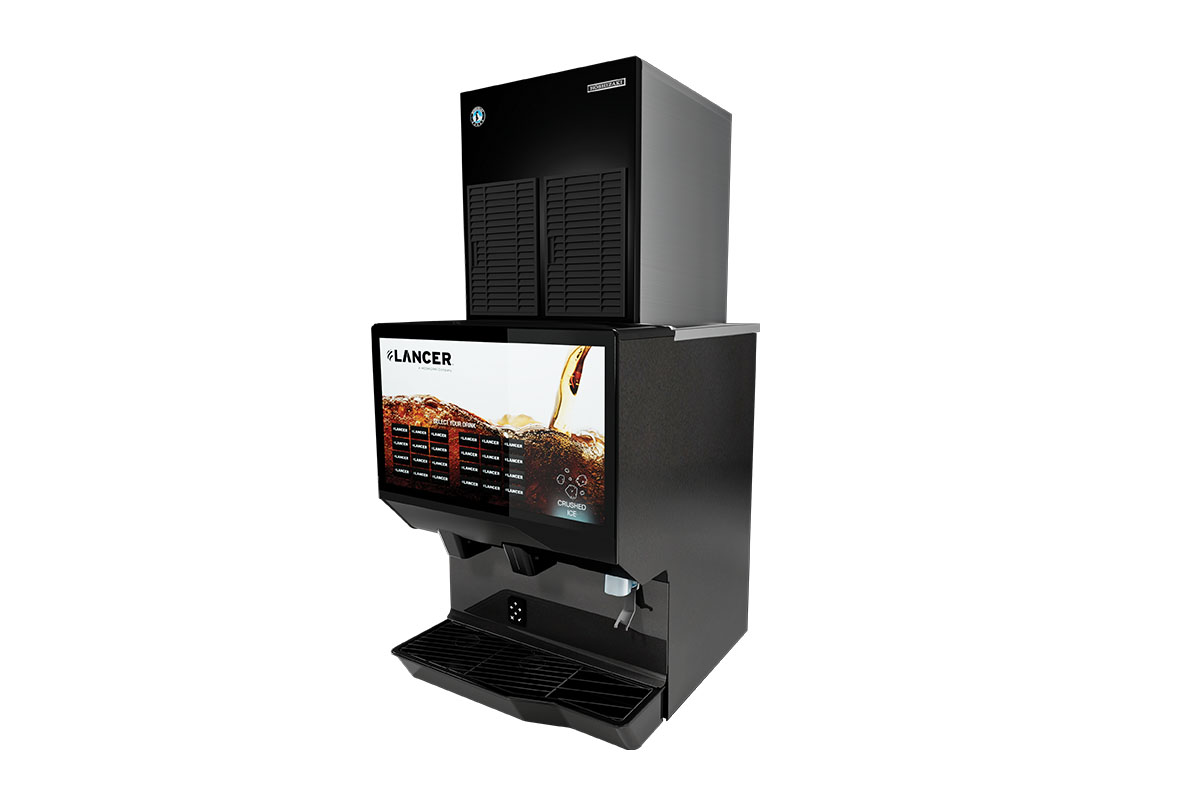
Lancer
Model: IBD Bold 30i
Dimensions: 30-in.W x 33 4/5-in.D x 40 3/5-in.H
Details: Dispense up to 24 brands (16 chilled), plus optional flavor shots. Specify your ice type of choice, and choose from two compatible bin sizes: 30-in.W or 22-in.W. Show off brand videos on the customizable screen.
Website: lancerworldwide.com
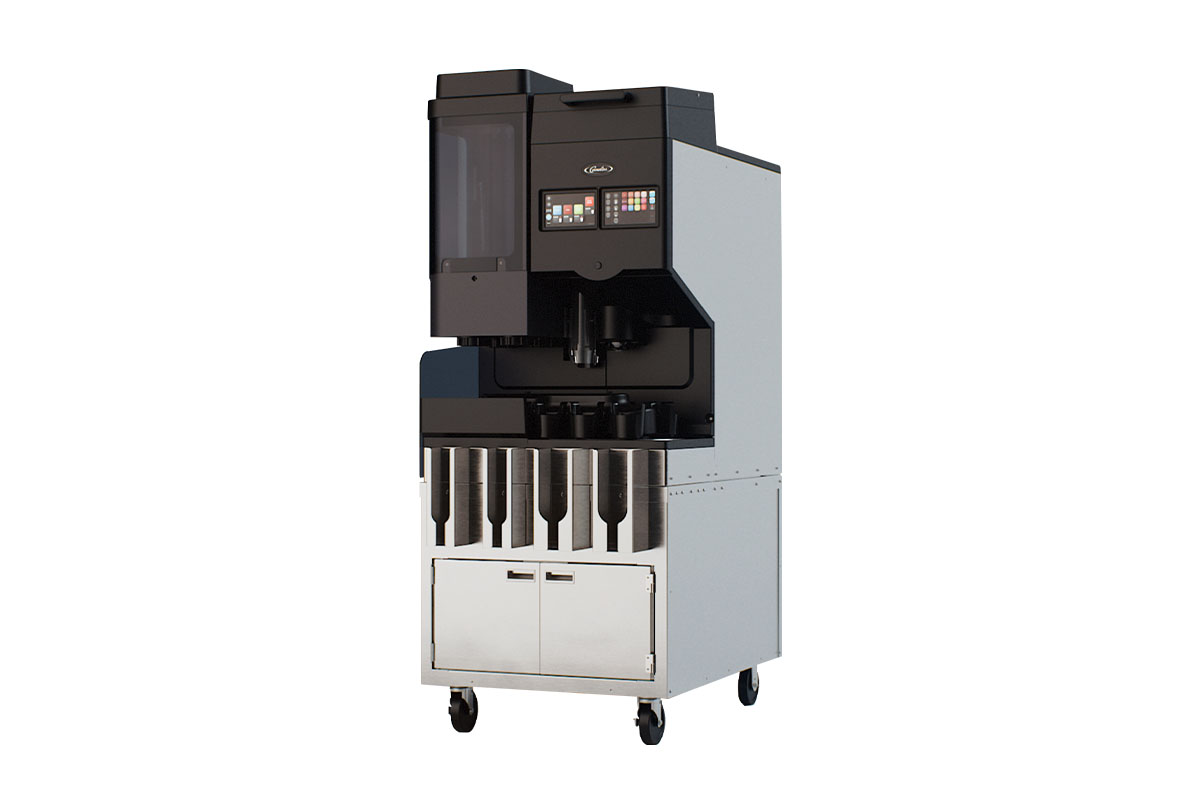
Cornelius
Model: Automated Crew-Serve Dispenser
Dimensions: 30-in.W x 41-in.D x 47-in.H
Details: Free up staff with this back-of-house unit, which integrates with the point-of-sale for accurate, consistent dispensing of ice and beverages alike. The unit has capacity for 12 chilled syrup lines and four ambient products. The carousel holds up to 10 cups at a time.
Website: cornelius.com
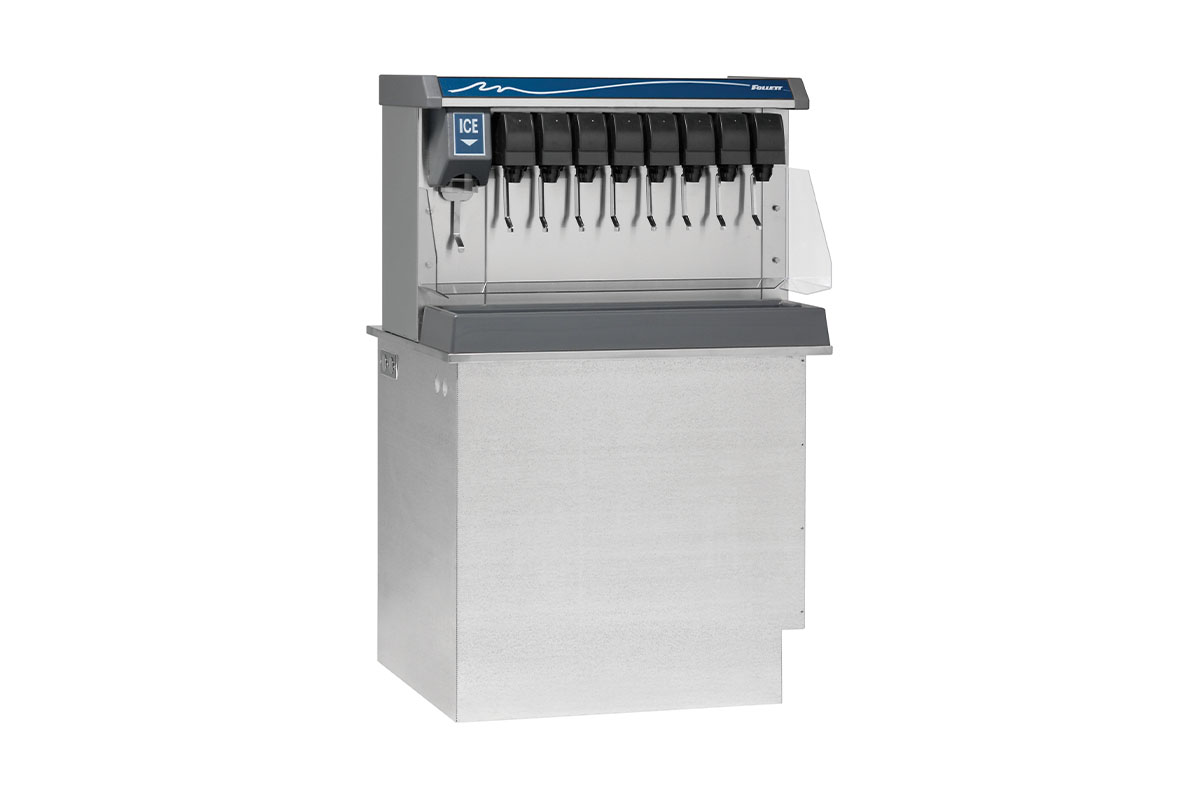
Follett
Model: Vision VU155
Dimensions: 31 1/4-in.W x 27 2/5-in.D x 22-in.H
Details: Designed for island setups and ADA compliant 34-in.H counters, this unit offers undercounter ice storage (up to 150 lb.) and more. Choose from left or right-side ice dispensing and offer up to eight beverage brands.
Website: follettice.com
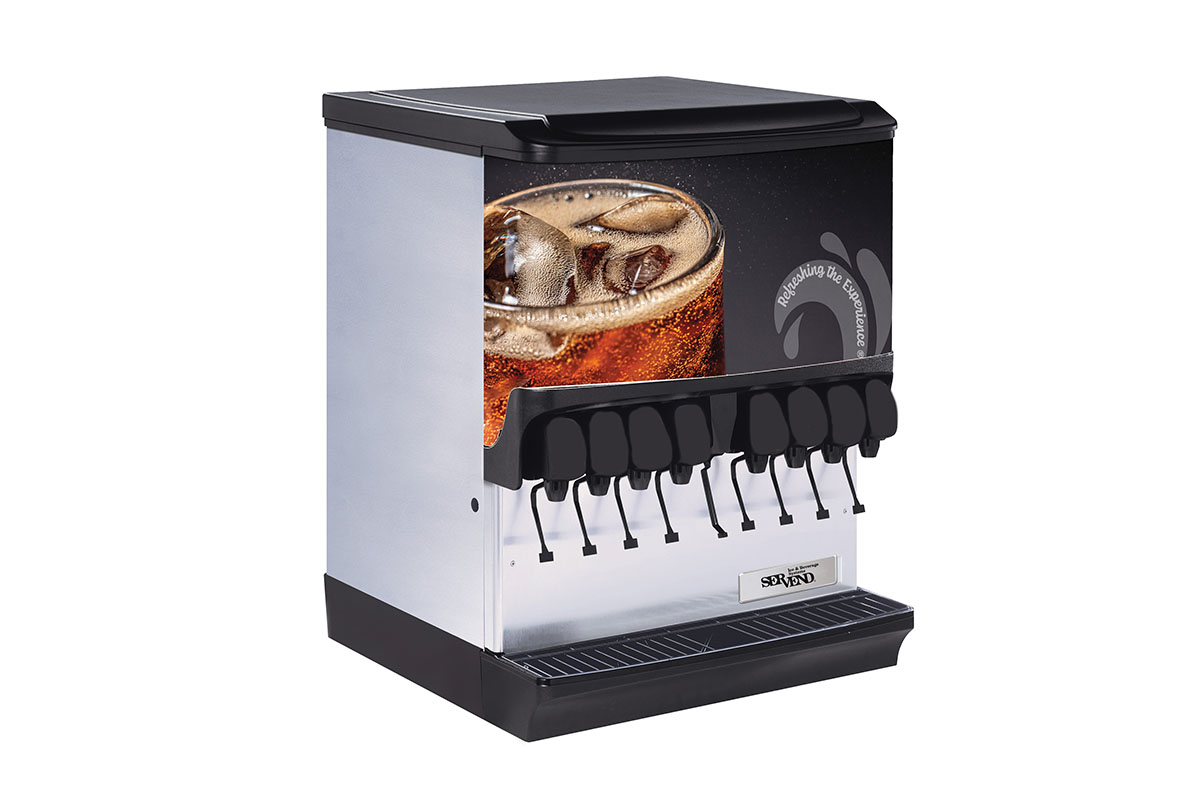
Multiplex
Model: SV 250
Dimensions: 30-in.W x 31 1/8-in.D x 40 7/8-in.H
Details: Choose from multiple ice types as well as a manual fill or top-mount ice machine setup. Dispense products of choice from up to 10 valves.
Website: multiplexbeverage.com
ABOUT THE AUTHOR

RELATED CONTENT
- Advertisement -
- Advertisement -
- Advertisement -
TRENDING NOW
- Advertisement -
- Advertisement -
- Advertisement -