
Smart Buying Tips for Heavy-Duty Planetary Mixers
The latest models offer upgrades in durability, ergonomics and automation.
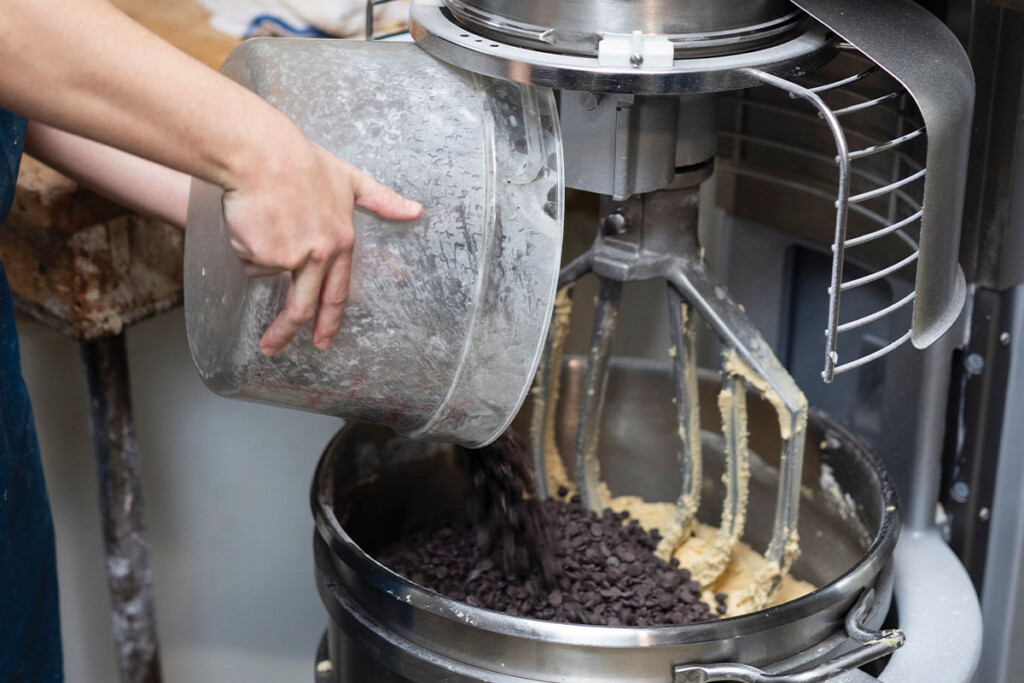
Whether for mixing doughs, blending batters or whipping cream, heavy-duty planetary mixers are versatile all-stars. “Heavy-duty planetary mixers are commercial workhorses designed for continuous, high-load production, not occasional batch prep,” says one manufacturer. “These mixers are built to run all day in demanding environments like bakeries, commissaries and high-volume kitchens.”
Heavy-duty planetary mixers range from 10-quart countertop models all the way to 200-quart floor mixers. However, it’s not the size, capacity or horsepower that makes a mixer heavy-duty, but rather that it’s built to withstand continuous use. “That means the components are built to last batch after batch with full loads in that bowl,” says another manufacturer. Motors are industrial-grade and components such as bowl guards, for example, need to be sturdy enough to withstand being removed and cleaned multiple times a day.
The latest mixer models boast advancements in automation, ergonomics and durability. Here’s what to consider when investing in a heavy-duty planetary mixer.

From batters to meringue, your favorite recipes can be stored and accessed with ease on select mixers. Courtesy of Varimixer.
Automation Benefits
If your staff tends to accidentally overmix recipes while multitasking in the kitchen, they might appreciate automated features such as an integrated digital timer that automatically stops the mixer when the time reaches zero.
Some models go a step further. “We have a full digital touch screen display that allows 24 recipes to be inserted into it, and it can do those recipes step by step, with every one having directions on the screen and also pointing to the exact rpm you want for that stage of the recipe as well as how long you want that cycle to last,” one manufacturer says. The display also maintains a log of other metrics, such as how many times each recipe is run, and maintains an error log that technicians can access during service calls.
All mixers these days have emergency stop features, meaning the moving parts will stop automatically if the bowl guard is removed. However, select manufacturers say they compete on how quickly that stoppage occurs. For example, one manufacturer’s newest model stops rotation within three seconds of the mixer being turned off (or likewise, the bowl guard being opened), no matter what speed the mixer is running at, while other units can take as long as 30 seconds to come to a complete stop.
Durability Updates
In their most recent models, manufacturers have made upgrades to solve for operator pain points, such as how mixer components can chip or wear over time. With its latest release, one manufacturer upgraded its standard cast-iron painted planetaries with aluminum planetaries coated in a heat-treated, hybrid powder finish that’s more resistant to corrosion, scratches and chipping. “It helps improve food safety by eliminating areas where bacteria could settle,” they say. “It also makes it easier to clean the mixers.”
One manufacturer also offers an option to increase the dust- and water-resistance of its stainless mixers with a higher-grade gasket that protects internal components from water and dust. “In a lot of these larger kitchens, they are hosing the flooring down at the end of the shift, so that’s going to splash up onto any equipment that is in the area,” they say. “Being able to hose it down is just an added benefit.”
Stepped-Up Ergonomics
Improvements in ergonomics can help reduce strain from repetitive movement. “One thing that is pretty unique with our mixer is the ability to drop the bowl all the way down and clear whatever attachment is on that unit,” says one manufacturer. “So, if it has a beater on there, you can drop the bowl all the way to the point where you don’t have to take the beater off to get the bowl off. That drastically reduces the amount of bending over and lifting that you have to do when you’re doing batch after batch. When you have a larger 100-quart or 150-quart mixer, that’s very heavy product in the bowl.”
These types of features are similarly useful in countertop models with smaller capacities as well. “(Our 10-quart and 20-quart models have) a heavy-duty bowl-lift lever for improved ergonomics,” says one maker. “So, instead of wrestling a full bowl up or down by hand, these mixers use a lever-assist mechanism that makes lifting the bowl into place smoother and more controlled, which is especially helpful when a 20-quart bowl is full and heavy. This helps reduce shoulder and back strain during repeated loading and unloading.”
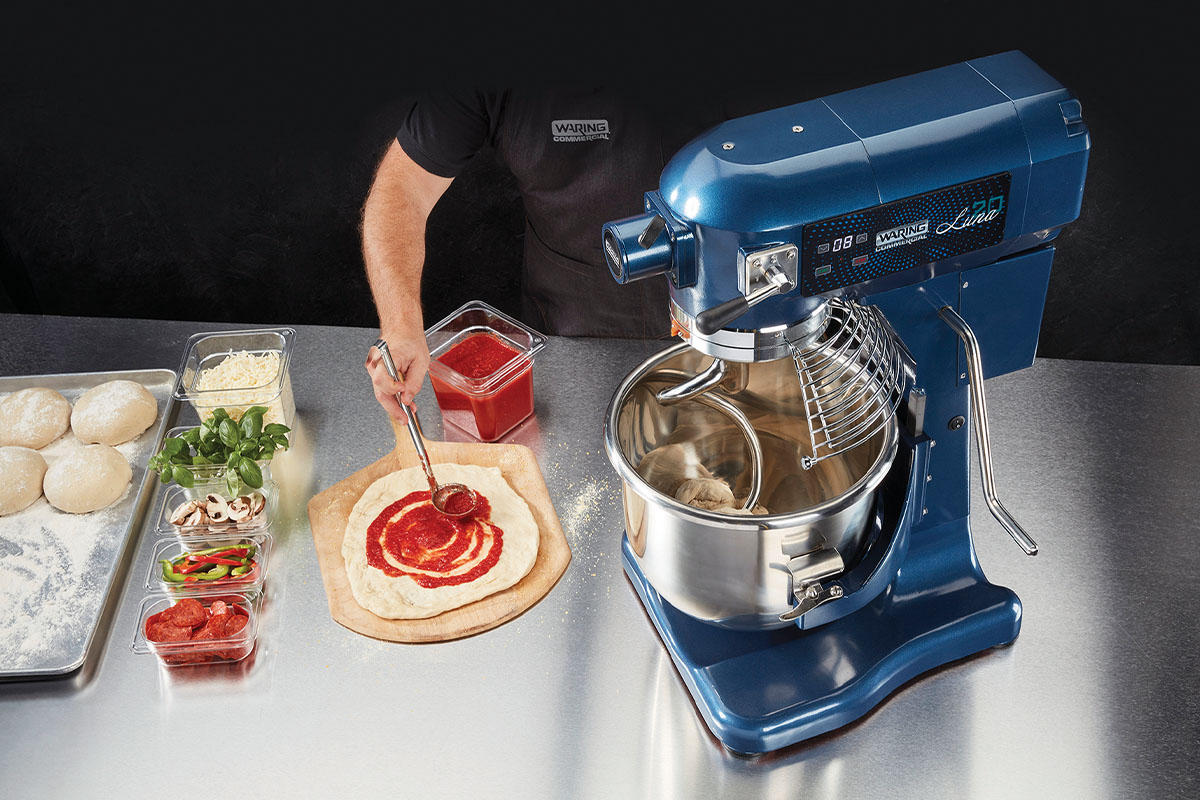
Whether specifying a floor or countertop model, be sure to understand a model’s capacity. Courtesy of Waring.
How To Choose?
Consider checking with trusted operators, dealers and/or manufacturers’ reps to help pinpoint what mixer may work best for your needs.
Consider what features are nonnegotiable. If improving efficiency is one of your goals, you might look for a model with ease-of-use features like a swing-out bowl to quickly add ingredients. If you work with recipes that require different speeds, note that not all mixers can shift speeds without turning the mixer off first. If that’s an efficiency your team could benefit from, look for a model with quick-shift capabilities.
If space is tight in your kitchen, you might appreciate a mixer with attachments to slice vegetables or chop meat so employees can perform other food prep tasks in addition to mixing.
Common Pitfalls
Manufacturers clarify that mixer sizes and capacities can be misunderstood; just because ingredients fit in the bowl doesn’t mean a model has the needed capacity.
“One of the most common mistakes is choosing capacity based solely on bowl size, without accounting for dough weight, hydration or mixing frequency,” one manufacturer says. “This often leads to operators overloading smaller mixers.” Manufacturers offer capacity charts and interactive online tools to help operators find a right-sized mixer.
Another mistake is purchasing one mixer size across all locations. “In reality, a mix of (smaller and larger) units often provides better flexibility, efficiency and cost control,” says one manufacturer. “We can help operators avoid these pitfalls by specifying mixers based on real recipes, peak demand and total cost of ownership, rather than price alone.”
Quick Study
Zero in on the features driving some of the newest heavy-duty planetary mixers.
![wsm10lte 3qtr lft open 0222[1]](https://www.fermag.com/wp-content/uploads/2026/02/wsm10lte_3qtr_lft-open_02221.jpg "wsm10lte 3qtr lft open 0222[1]")
Waring
Model: WSM10LT
Bowl Size: 10 qt.
Features: Tap into three speeds on this countertop model, complete with a digital, 99-minute timer. Thermal overload protection adds reliability. Included attachments—a stainless whisk, dough hook and mixing bowl, and an aluminum mixing paddle—are dishwasher safe.
Website: waring.com
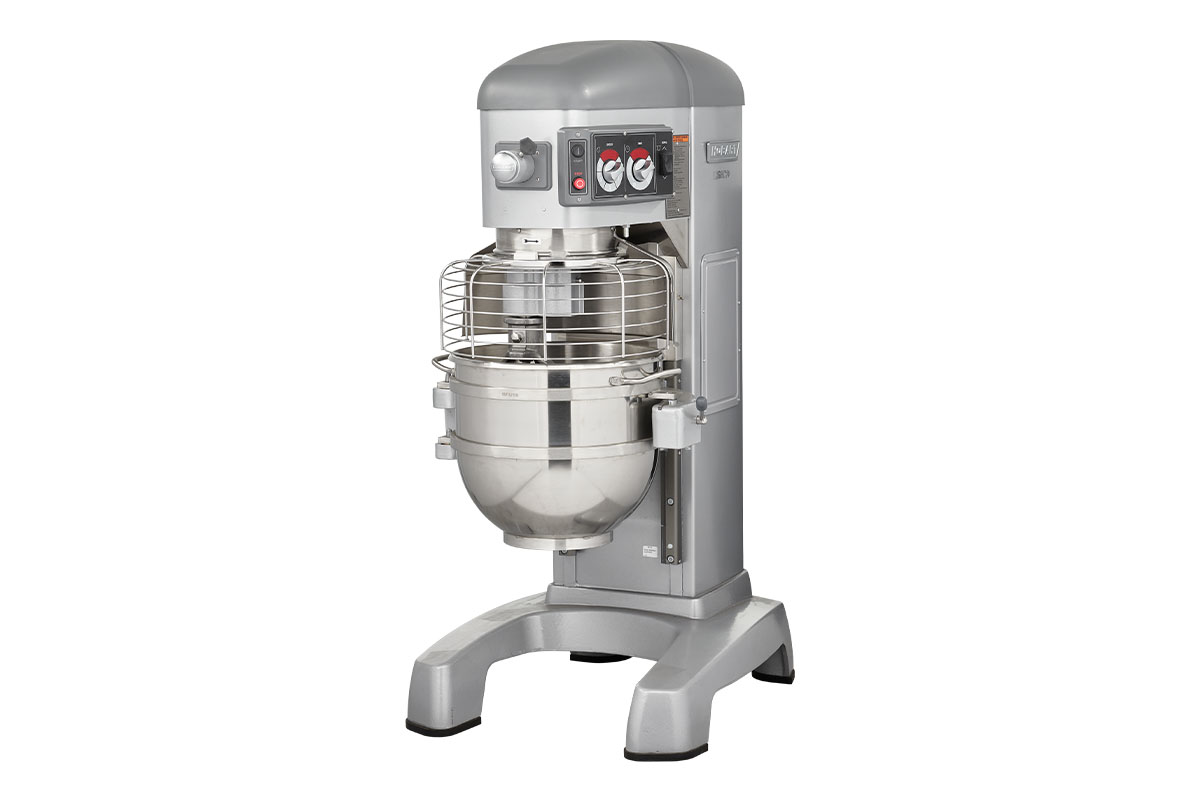
Hobart
Model: HL 600 Legacy+
Bowl Size: 60 qt.
Features: Tap into five mixing speeds (one for stirring) without powering off, then stop moving parts in three seconds. A swing-out bowl and power bowl lift add ergonomic ease, while automatic time recall saves steps. The stainless bowl guard is dishwasher safe.
Website: hobartcorp.com
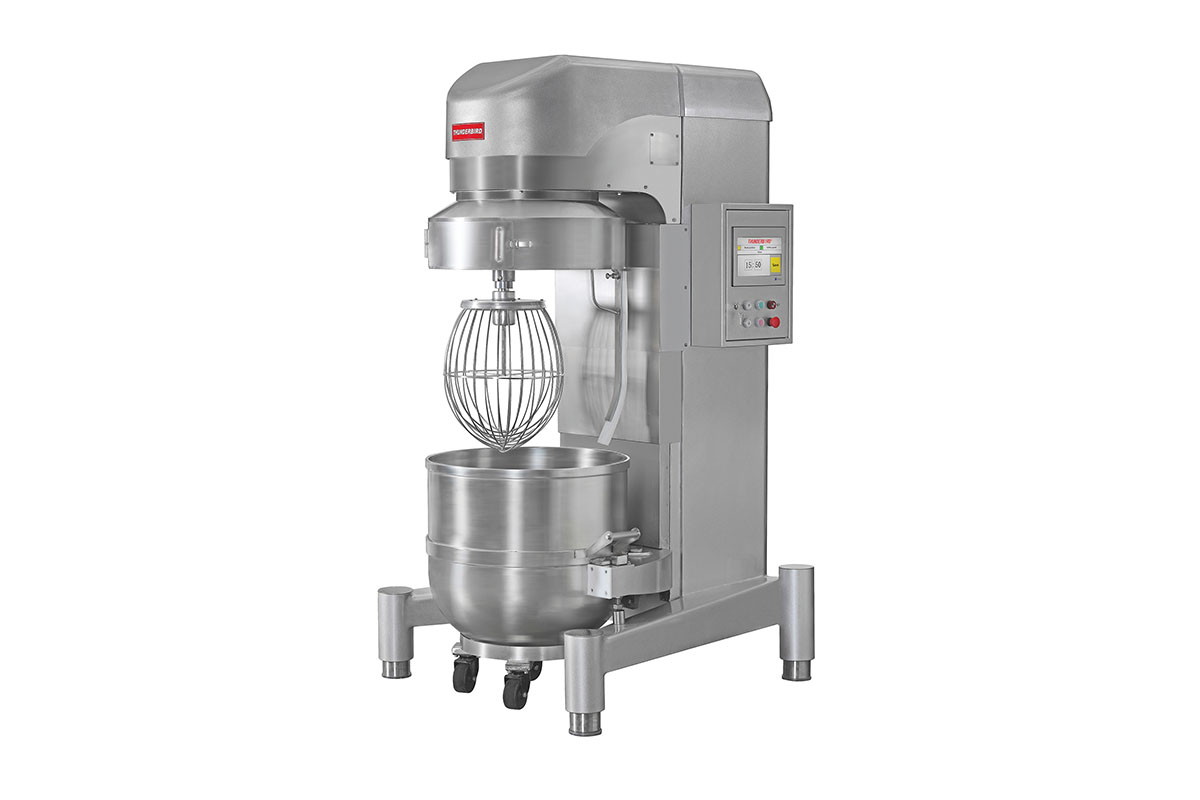
Thunderbird
Model: ARM-200
Bowl Size: 200 qt.
Features: Raise and lower the bowl, and set recipe timers and speeds via the touch screen. Mix large quantities of dough on this unit, which includes a beater, whip and bowl dolly. Add an optional spiral hook, and consider sizing down to a 140-qt. bowl.
Website: thunderbirdfm.com
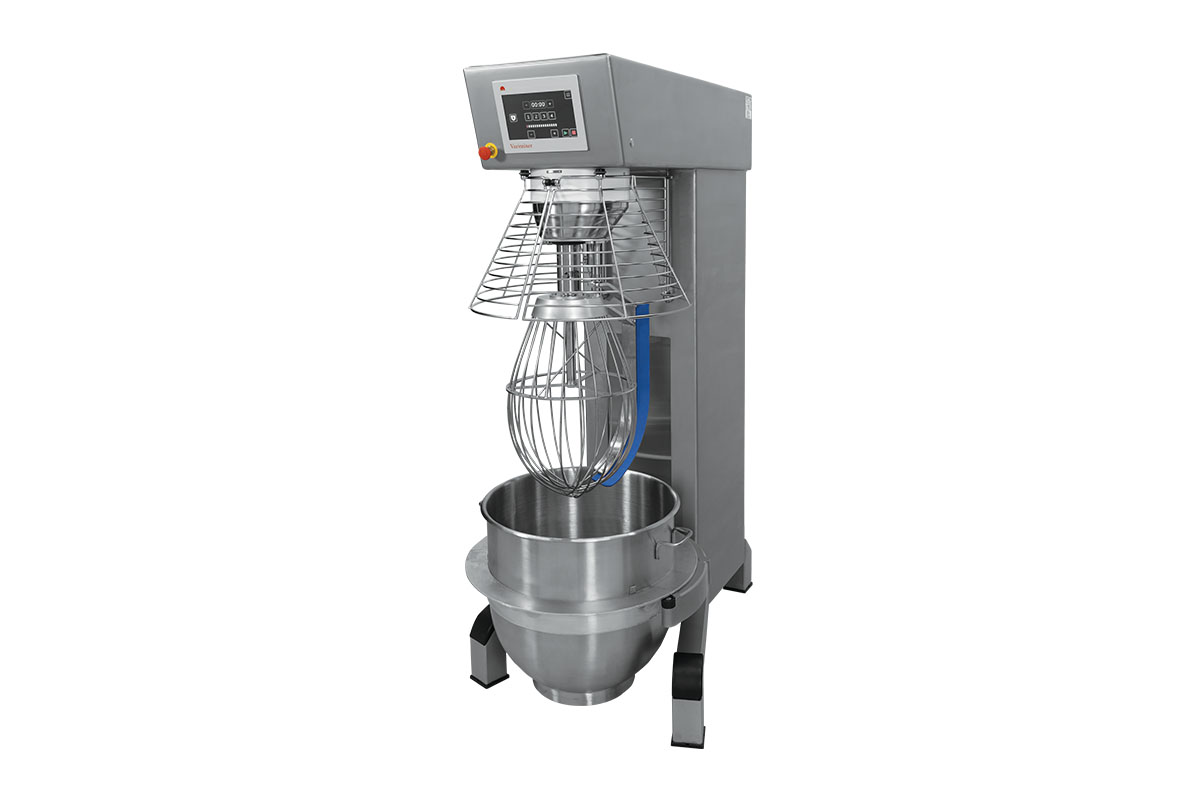
Varimixer
Model: ERGO150VL5
Bowl Size: 150 qt.
Features: Program up to two dozen recipes, setting favorites for quick startup. See error diagnostics and usage logs. Automatic bowl lowering, plus the ability to remove the bowl without removing agitators, add ease. Upgrade for a fully waterproof body.
Website: varimixer.com
Editor’s note: Featured models have been introduced or updated since May 2022.
ABOUT THE AUTHOR

RELATED CONTENT

- Advertisement -
- Advertisement -
- Advertisement -
TRENDING NOW
- Advertisement -
- Advertisement -
- Advertisement -