
SPONSORED CONTENT
Where Tradition Meets Technology: Inside Keste Pizza’s Kitchen
How renowned pizzaiolo Roberto Caporuscio combines authentic Neapolitan craftsmanship with modern kitchen innovation in New York City.

The story of one of New York City’s cult-status pizzerias started at a small dairy farm southeast of Rome.
From an Italian Dairy Farm to New York City’s Keste Pizza
Roberto Caporuscio grew up in Pontinia, located in Italy’s Lazio region, where he learned how to produce cheese on his family’s dairy farm. He later traveled to Naples to learn the craft of creating Neapolitan pizza and immigrated to the U.S. in 1999. After operating pizzerias in Pittsburgh and then Ridgewood, N.J., he felt he needed a bigger audience to deliver on his mission to serve authentic Neapolitan pizza. “We don’t make food; we make history,” says Caporuscio, who also is U.S. president of the Pizza Academy Foundation, the Italian governing body that teaches Neapolitan pizza making.
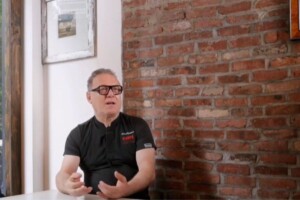
Efficiency is crucial, Caporuscio says.
He moved to NYC to open Keste Pizza in 2009 on Bleecker Street in the West Village. Making Neapolitan pizza is a painstaking process, starting with the dough, which is made with Italian flour and undergoes a two-day fermentation process. Caporuscio’s staff uses tomatoes and extra-virgin olive oil imported from Italy, and they make their own mozzarella in-house. Each pizza takes a 90-second turn in the copper tile-covered brick-and-stone pizza oven from an Italian manufacturer before emerging with bubbly, char-spotted crust and a signature soft center. It wasn’t long before Keste became a NYC media darling, earning a spot on Food & Wine magazine’s “Best Pizza Places in the US” list and the honor of “#1 Pizza in New York” by New York Magazine.
Balancing Authentic Pizza With Kitchen Efficiency
Though authenticity and consistency have been Caporuscio’s overarching tenets, he considers efficiency to be crucial for surviving in bustling NYC. “If you live in New York .. and you own a business, you need efficiency every single day, and to do that, you need technology,” he says.
In its current location on Fulton Street in NYC’s Financial District (the original West Village location closed in 2020), Keste’s menu features other dishes besides pizza, such as focaccia, cannelloni and several types of lasagna, including meat lasagna with pork and beef sauce and a vegetarian version with pesto cream and zucchini. Purchasing Unox combi ovens has enabled Caporuscio’s kitchen staff to shorten the cooking time of these baked items to better complement the speedy nature of Neapolitan pizza. “How you can do a 90-second lasagna?” Caporuscio says. “It helped me … stay in the business.”
Which Unox Ovens Does Keste Pizza Use?
Denver, N.C.-based Unox manufactures combi, speed and convection ovens as well as hot holding solutions. Now, Caporuscio’s old-world pizza oven shares space in the kitchen with three Unox models: an UNOX CHEFTOP combi oven, a SPEED-X self-washing combi speed oven, and an EVEREO hot holding and food preservation system.
Caporuscio says that in Italian, Keste means, “This is it.” With a kitchen now supported by tradition as well as technology, he hopes that’s precisely what his diners will be thinking when they take their first bites.
RELATED CONTENT

- Advertisement -
- Advertisement -
- Advertisement -
- Advertisement -
TRENDING NOW
- Advertisement -
- Advertisement -