Exclusive: Foodservice Design Best Practices
With kiosks, robots and more, operators’ new designs embrace technology and efficiency to improve the customer experience and unlock future flexibility.
For any operator considering a new design or looking to refresh a brand, understanding the current landscape of foodservice is important. From the real estate market to the labor force, a variety of factors make an impact on planning and implementing a new design, but one of the most important things to consider is the customer.
“People are looking for convenience, individualization and customization,” says Jeremy Kittelson, principal at Ricca Design Studios. Designs that can meet all three of those have the right combination of equipment, an efficient workflow and tools that support customer service. Here’s what you need to know to help shape your design process and build something successful for years to come.
Future-Proof With Flexibility
No one wants to invest in a full-scale design for a new prototype only to have it outdated within a year of opening. “It’s important to design with flexibility in the space and infrastructure to allow for future growth,” says Rob Seely, associate vice president of operations strategy and design at WD Partners. That could be in utility infrastructure, such as more space in the fuse box or additional gas lines, or allowing an extra 6 inches of space under the exhaust hood for future equipment changes. “You don’t want to overbuild, but by putting a little thought into the design, you can more easily adapt when the menu changes or traffic increases,” Seely says.
Flexibility also impacts equipment. “A modular cooking design, where things aren’t all built into one counter, is important to consider,” Kittelson says. “When you want to launch a new menu item, or you need to resize equipment to keep up with production, you want to be able to easily change out things to fit your needs.”
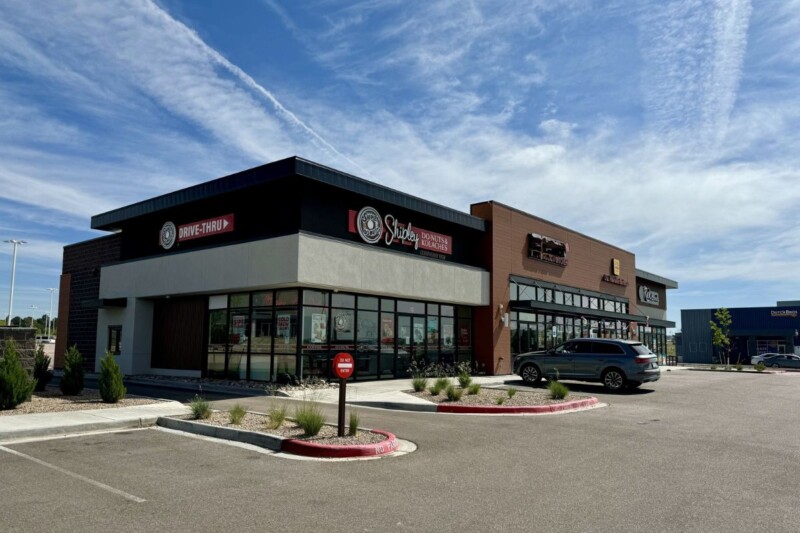
GoTo Foods created a modular design not only to make future adaptations easier, but to improve scalability. “Our new design for Schlotzky’s Deli implemented a modular construction model that allows us to look at a variety of real estate venues, including airport spaces, strip malls, existing real estate or new construction,” says Tony Maldonado, senior vice president of construction and design at GoTo Foods. It starts with a standardized layout that optimizes workflow, but one which each location can scale up or down in size. “The different pieces, whether it’s the counter, cabinets or components within the line, are sized to allow operators to pick and choose dimensions that fit their space,” Maldonado says.

The newest design for Schlotzky’s Deli is modular, enabling greater locational flexibility.
At Bobby’s Burgers, flexibility is a mindset. The chain, launched in 2021 by chef Bobby Flay, listens to operators for ways to improve. “We designed our prototype, and use it as we expand, but with every new restaurant we design and build, we look for ways to be more efficient, and engineer some of the costs out to make it more economical for the franchisee,” says Patric Knapp, vice president of development and operations at Bobby’s Burgers.
For example, one operator found cost savings in building a pony wall for the expo line rather than making it all stainless. Another change moved the dredge station from the expo line to under the hood on the cookline, reducing steps for staff. “Two feet under the hood is a one-time expense with lasting benefits, as it allows staff to execute their job better,” Knapp says.
At Bobby’s Burgers, one operator found cost savings in building a pony wall for the expo line rather than making it all stainless.
Focus on the Customer Experience
Successful designs look for ways to improve customer service and accommodate various ways of ordering and dining. For Happy Joe’s, that meant designing a new multipurpose counter, implementing AI and bringing in a robot. The new stores feature a large oval counter right as you walk in the door that includes hot and cold cabinets for takeout and delivery orders on the front, a drink station for servers to refill fountain drinks and beer in the middle, and a back half dedicated to ice cream and desserts, with menu boards above.
“Now customers are greeted immediately, and don’t have to walk all the way to the back of the store to place an order or get their takeout,” says Tom Sacco, CEO of Happy Joe’s. Another goal was to reverse lagging ice cream sales. “Having the counter at the back made it hard to upsell,” Sacco says. “Now it’s right there where people are eating, kids can see it, and it’s hard to walk out without getting dessert.”
Further, adding an AI answering service at Happy Joe’s helps with the increase of call-in orders as customers shift to more off-premise dining. According to the National Restaurant Association, three out of four meals are now ordered to-go. The AI system can take over 100 calls at once, where previously any call that didn’t get through to the four lines reached a busy signal and often resulted in lost sales.

A service robot chips in at Happy Joe’s.
A service robot, Happy 2.0, delivers pizza and helps bus tables. “We haven’t replaced any person with a robot, but it allows servers more time to devote to our customers, whether it’s refilling drinks or helping people find the bathroom,” Sacco says. The results have largely been positive, with tips larger at the restaurants using this program.
For other operators, digital kiosks are front and center in new designs. “Kiosks are one the biggest changes to the customer experience,” Maldonado says. “It allows the customer who wants to self-serve all the way through to move quickly from purchase to exit.”
Bobby’s Burgers integrated kiosks in a way that individualizes the customer experience. By attaching a phone number to the order, the customer receives text updates when the food is cooking and when the order is ready. “Whether you order through a mobile app, a kiosk or a cashier, it’s important to talk to customers through their journey,” Knapp says.
Use Equipment to Improve Operations
While ordering and customer service are a key factor in foodservice design, it’s the cooking equipment that’s the backbone of the operation. Choosing the right equipment helps provide quality and consistency over time and across locations. “We’re seeing manufacturers respond to today’s foodservice environment with equipment that is more complex in the things it can do while being easier for individuals to use,” Seely says.
For example, the clamshell grill at Bobby’s Burgers is programmed to allow a line cook to deliver a burger to Flay’s specifications every time with the push of a button. A conveyor oven at Happy Joe’s has three individualized cooking chambers. The ability to cook everything from pizza to fries, burgers and chicken tenders in one piece of equipment saves time and valuable kitchen space.

Bobby’s Burgers uses a clamshell griddle for operational consistency.
Considering connected equipment is another important aspect in the future of design. For operators with multiple locations, the ability to collect data can be invaluable in improving overall efficiencies. At Bobby’s Burgers, the ability to track the number of orders of onion rings and fries as well as the oil quality allows them to program settings to tell the team member when it’s time to filter the oil. Connectivity also gives operators the ability to upload recipes remotely and access planned maintenance tools.
While creating the best experience for customers is important, the foundation for a successful foodservice design considers the operator first and foremost. From equipment choice to flexibility features, the best designs are repeatable, easy to implement and efficient to run.
A Consultant’s Wish List
Partnering with foodservice design consultants allows operators to benefit from their depth of knowledge of regulations and infrastructure, as well as relationships with manufacturers, contractors and others in the industry that help bring a big-picture view to the design process. There are a few things operators can do to help ensure the final product meets expectations:
- Come in with clearly defined goals. Rather than trying to be everything to everyone, in this competitive market it is better to know what you are and do that thing really well.
- Know your menu. This will determine the type of equipment, how much space will be needed for storage and prep, and the staff needed.
- Know your volume, and anticipated growth. Consultants can use data from industrial engineering methodology to anticipate growth and plan ahead.
- Understand your labor market. The type of talent you expect to hire will play a role in the kinds of equipment you will purchase to meet your product quality goals.
- Be realistic with time. The design process begins with talking through the brand and creating the vision, then proceeds to design development, creating the construction documents, and finally construction. Altogether, it can take a year to a year and a half to go from concept to completion.
ABOUT THE AUTHOR
RELATED CONTENT
- Advertisement -
- Advertisement -
- Advertisement -
TRENDING NOW
- Advertisement -
- Advertisement -
- Advertisement -