
Consultants Highlight Catering Equipment Trends
Take in the latest from the field, courtesy of TBCI Design, S2O Consultants and Rippe Associates.
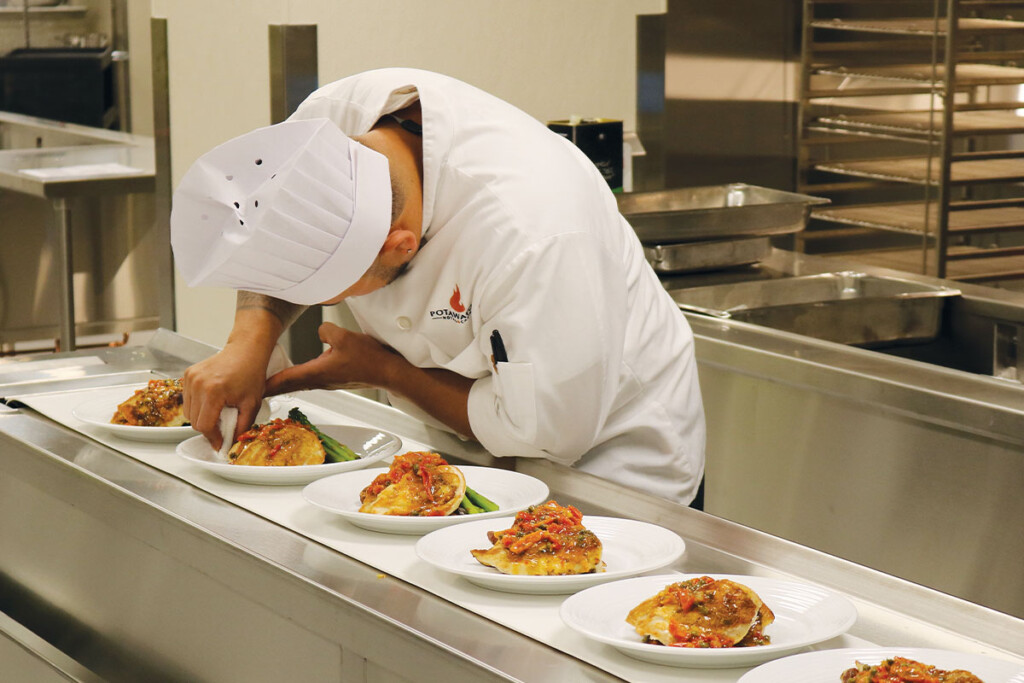
Catering continues to be a profit center for many operators.
Here, three foodservice consultants—David B. Hammersley of TBCI Design in St. Petersburg, Fla.; Ryan Rongo of Chicago-based S2O Consultants; and Matthew Anderson of Rippe Associates in Minneapolis-St. Paul—share the latest in equipment they’re recommending for their catering clients.
Keep it Moving
Rongo often works with sports teams on stadiums, arenas, offices and training facilities. In offices with catering needs, he designs pantry spaces within the building for staff to stage catered meals transported from a central production kitchen. “Usually it’s just table space to be able to lay out food on platters before it goes into a conference room, but for a client doing plated events, we may have some kind of specialized system to plate things, like we’ve done a 14-foot conveyor inside a pantry space,” Rongo says. “They are staging the hot boxes and cold boxes around the conveyor, and plates are put on the conveyor and six or seven (staffers) will work the conveyor line to place a food product on each plate, similar to what you would see in a banquet hall.” Pantries might also include a station where staff can scrape china clean before loading onto a Queen Mary cart for warewashing transport.
Going Ventless
Hammersley has recently specified ventless equipment for clients who are adding catering spaces within the footprint of their existing buildings so they can host weddings and other events serviced by third-party caterers. “We are working with a museum that has two catering kitchens and because they don’t want to do ventilation, we are using ventless combis and ventless convection ovens,” he says.
Multifunctional Units
Versatile combination equipment remains in demand, especially for space-strapped operators. Casinos, for instance, “don’t want kitchen space; they want gaming space,” Anderson says. “In a hotel, they’d rather have a bigger banquet space so they can get more bodies in there. So I have to figure out how to shrink that kitchen down and make it as efficient as possible.” He is looking to the industry’s latest multifunctional cooking systems to give operators space-saving solutions that can pan fry, deep fry, sous vide, pressure cook, boil and more. “We have done demos where we are making the pasta sauce on one side and boiling the water for the pasta on the other side,” he says. “Based on the heat it moves the heating elements around on the panels to agitate whatever’s in there, so you’re not stirring the pasta constantly; it does it for you.” Such equipment allows operators to do more with fewer people. “They have supportive technology that allows a single person to execute high-volume catering events by following the prompts—once recipes are entered—and taking advantage of the cook, hold and fire features of these pieces,” Anderson says. Hammersley also recommends such equipment, referencing a pressure tilting skillet that also acts as a kettle, griddle and pressure cooker. “Those components cover a lot of bases and you get a maximum amount of use in a minimum footprint,” he says.
Incognito Induction
Tables, carts and credenzas with built-in induction burners give caterers a more elegant solution to display hot food. “When you’re using (canned heat) and a chafing dish, you don’t have a lot of control. It’s just a blue flame coming up and it’s ripping hot,” Anderson says. “With these pieces that have built-in induction, it’s just a flat surface that looks like any other table, but once you turn it on and put the right vessel on it, you can control the temperature without it being obvious to anyone that’s what’s happening. And another part of the table can be cold or ambient.”
Entertain with Espresso
Lastly, to wow a client, Hammersley suggests giving careful thought to where scheduling occurs. “You need a pretty room with an espresso machine where you can really entertain,” he says. “If they’re dropping $50,000 on a wedding, that has to be part of the moment.”
ABOUT THE AUTHOR

RELATED CONTENT
- Advertisement -
- Advertisement -
- Advertisement -
TRENDING NOW
- Advertisement -
- Advertisement -
- Advertisement -