Exclusive: 30 Smart Savings Tips

From menu strategies to design ideas, gain savvy inspiration from across the industry.

30 Smart Savings Tips

As Foodservice Equipment Reports turns 30, we’re celebrating with our entire community. We know success comes from using our resources and sharing knowledge to be well-positioned for future growth.

In honor of this approach, we’ve collected 30 smart savings tips from operators and others across the foodservice industry. From cost savings in day-to-day operations to finding ways to reduce energy use or streamline efficiencies for improved productivity, every aspect of savings impacts the bottom line, directly or indirectly. Here’s to working together to bring everyone continued success for another 30 years and beyond.

1. Chipotle 4000th Store Celebration 223

TAKE ADVANTAGE OF AUTOMATION

1 Garrett Calderwood, vice president of operations services at CHIPOTLE, reports improved efficiencies without compromising quality by investing in a high-efficiency equipment package. The package includes a three-pan rice cooker, dual-sided plancha, high-capacity fryer and produce slicer. The equipment helps with automating or accelerating labor- intensive prep, high-volume prep and cooking processes, allowing teams to be deployed more effectively during peak periods, resulting in a more efficient kitchen that supports higher volumes without additional staff.

IMPROVING WATER EFFICIENCY

2 DINE BRANDS saved 817 million gallons of water in 2025, in part by installing hydro-efficient devices in several Applebee’s and IHOP restaurants. These devices helped reduce clean water consumption by 25% and sewer output by 17%, while efficient, low-temperature dishwashers and dipper wells also contributed to the savings.

FINDING SAVINGS AT CONSTRUCTION LEVEL

3 In May, HUEY MAGOO’S introduced a freestanding drive-thru prototype that reduces ground-up development costs by about 40%. The design is 750 square feet smaller than the prior freestanding design, using a more efficient layout. In the kitchen, the brand organized cooking zones to support speed and optimized the workflow to minimize steps.

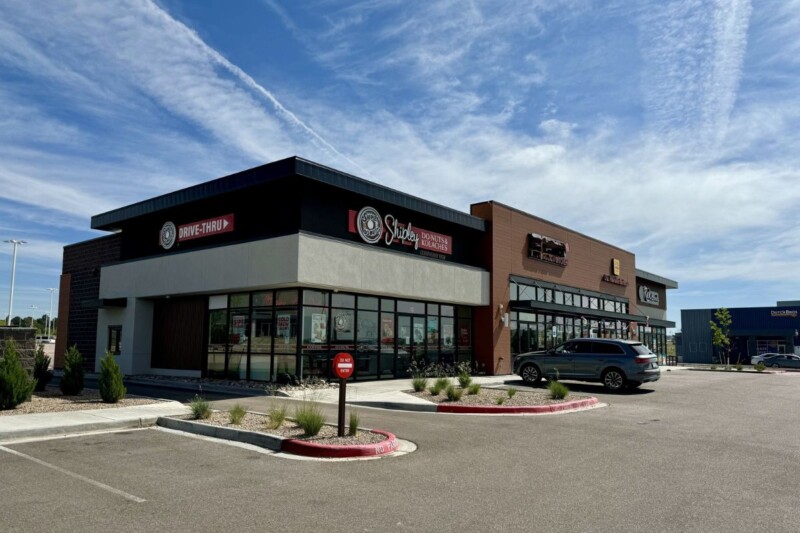
4 SCHLOTZSKY’S DELI’S prototype, launched in March, caps at 2,100 square feet, over 1,000 square feet less than the high end of its previous range. Through a combination of footprint reduction, the use of value-engineered materials and modular construction, the design will provide an estimated 20%-25% reduction in operating costs and support more efficient operational economics over time.

5. Chicken Salad Chick Interior Shot

5 CHICKEN SALAD CHICK simplified both layout and design in its latest prototype. “We reduced costs with more open restaurants that improve operational efficiency while at the same time simplifying electrical and HVAC requirements,” Miles Coggins, senior director of design and construction, tells FER. Also, streamlining the color palette from seven colors to three helped reduce costs and minimize waste during construction.

6 HAPPY JOE’S fresh prototype took the dough-making out of each individual location, instead using an institutional kitchen for dough production. This change not only eliminated the need for a dough mixer and conveyor; operators also don’t need to spec storage for bags of flour and enzymes. The result: New restaurants are fewer square feet, which saves on construction costs.

7. Capriottis Cheesesteak Grill Chop

BUILD A PLAYBOOK FOR SUCCESS

7 CAPRIOTTI’S has written a playbook for all franchise partners and managers to follow. Filled with structured checklists that cover everything from ingredient prep to cash drawer reconciliation, it helps teams build consistent habits and reduces costly operational mistakes. “When everyone follows the same operating standards, it creates a more efficient restaurant that can control costs without sacrificing quality,” says Ron Martinez, senior director of training.

NEW FORMATS IMPROVE EFFICIENCIES

8 The strategy for cost savings and growth at TACO JOHN’S includes the creation of a scaled-footprint design targeted to nontraditional formats including convenience stores, travel centers, airports and other high-traffic venues. Optimized menus are tailored for smaller footprints as well as simplified labor and production models, all with a lower capital investment.

9 CHICK-FIL-A opened a delivery-only kitchen in Miami in June as part of the CloudKitchens network. It’s the company’s first delivery kitchen in Florida and the sixth of its kind in the U.S. The kitchen provides added convenience and faster service for people in the community, and allows the company to save on construction costs by eliminating the dining area.

10 CRAVEWORTHY BRANDS continues to embrace a nontraditional growth strategy through the August opening of The Crave Kitchen model at the Georgia Institute of Technology. This food hall brings seven brands together with one kitchen, enabling each concept to operate on a shared services platform, creating an infrastructure that operates efficiently at scale.

NEW ITEMS, SAME INGREDIENTS

11 TACO BELL’S 17% increase in same-store sales on a two-year basis can be attributed in part to its focus on menu innovation. When possible, the brand develops new menu items and LTOs using existing restaurant processes and ingredients, which helps minimize operational costs and maintain an efficient back-of-house environment.

12 JEREMIAH’S ITALIAN ICE created an entirely new dessert category, the Jelati Cake, using its core ingredient set. “By utilizing Italian ice, soft ice cream and layer-ins already available in stores, it gives an added revenue opportunity without adding new ingredients to the inventory,” says CEO Michael Keller.

GET CONNECTED

13 MCDONALD’S business strategy, McDonald’s NEXT, includes making technology a focal point to increase efficiency in operations. Equipment is a critical piece of the strategy, with a plan to invest in models that use connectivity. Connectivity will give management better insight into operations, which can lead to cost savings. For example, alerting operators when fryer oil needs changing or coolers need attention leads to saving money on repair and maintenance, reducing downtime and improving food consistency.

SPECIFY EQUIPMENT AROUND A HERO PIECE

14 Steve Starr, CEO of STARR DESIGN, encourages operators to take advantage of the consolidation in the equipment industry to create a package that leverages the dealer’s buying power. Find the one piece of equipment that’s central to the kitchen—your must-have—and then look for opportunities to specify other equipment through its sister brands.

EMBRACE TECHNOLOGY

15 Laura Lentz, owner of CULINARY ADVISORS, recommends embracing technology including digital menu boards, KDS, and prepay/preorder apps to reduce labor costs and streamline operations. Make sure you’re set up for implementing new technology by planning for the necessary outlets, data support and connectivity during design or before purchase.

CONSIDER EQUIPMENT PLACEMENT

16 Caroline Kauffman-Kirschnick, CEO of EMR, cautions that operators should be aware of equipment placement in regard to energy, not just workflow, when designing a kitchen. For example, placing hot equipment next to cold equipment could impact the performance, lifespan, and ultimately repair and maintenance costs. Putting equipment where it works most efficiently can spare you from energy and repair costs.

SAVE ON REPAIR COSTS IN THE DESIGN PHASE

17 Technicians need reasonable access to compressors, controls, filters, shutoff valves, electrical panels and refrigeration components. Josh Zolin, CEO of WINDY CITY EQUIPMENT, recommends spending time thinking about serviceability during the design phase to save on repair costs in the future. A simple repair can become far more expensive when equipment has to be removed, counters dismantled, or production interrupted just to reach the failed component.

SET UP FOR TO-GO ORDERS

18 At a recent project, Adam Goodloe, director of design for THE BOELTER COS., replaced a traditional “buyout” serving line with a custom-fabricated service line for off-premise orders that mirrors the main service line. As digital ordering, catering and app-based takeout grows, the setup pays off by offering a streamlined, efficient workflow to allow the existing team to adapt to increased production capacity.

USE VOLUME TO AN ADVANTAGE

19 Consider replacing a walk-in cooler with a less expensive, standard upright refrigerator. “Operators with enough volume to regularly hit distributor order minimums can receive more frequent deliveries, allowing the ability to skip the upfront construction costs of a walk-in and future replacement costs,” says Brad Wasserstrom, president of THE WASSERSTROM CO. A side benefit: fresher ingredients for customers.

LEVERAGE BUYING POWER

20 CHEDDAR’S SCRATCH KITCHEN used the purchasing power of its parent company, Darden, to find deals on ingredients and use those to create LTOs. Among the list of successful items were grilled pork chops with caramelized onions and bourbon glaze, listed at what it calls a “WOW! price” of $12.99, and a Texas T-bone with honey butter croissants and two sides for $21.49.

GO VENTLESS

21 PENN STATION SANDWICHES switched from a gas conveyor oven that required a hood to a ventless, electric model. “We save on our build-outs by not having to purchase the hood (or) have the contractor install it,” says Lance Vaught, president. “Plus, we no longer have the maintenance expense of the hood.”

MATCH PRODUCTION WITH DEMAND

22 RESTAURANT BRANDS INT’L., which includes Tim Hortons, Burger King, Popeyes and Firehouse Subs, has invested in advanced forecasting tools and inventory management systems that help align production with demand. These investments help optimize ingredient use, manage overproduction and reduce food waste. Coupled with guidance on portioning, storage and forecasting, it’s an effort that helps with cost savings as well as the company’s broader sustainability goals.

DESIGN FOR THE FUTURE

23 When creating a new AUNTIE ANNE’S design prototype, GoTo Foods tells FER it chose finishes and design elements within the brand’s footprint that can be easily updated with new colors or materials. That flexibility means when a remodel happens down the road, the reinvestment can be made at a lower cost.

ADOPT A HUB-AND-SPOKE MODEL

24 In both K-12 projects and some QSR operations, there has been a notable shift toward centralized production facilities and commissary kitchens, according to Eric Norman, principal of CLEVENGER ASSOCIATES. This approach delivers meaningful cost savings in several areas of the operation. Labor savings are significant, as it is no longer necessary to maintain fully staffed kitchens in each location. Capital costs are reduced, as expensive equipment is only purchased for one kitchen. And finally, consolidating purchasing, inventory management and storage helps reduce food spoilage, minimize waste and improve inventory control.

FIND EFFICIENCIES THROUGH AI

25 HUNGRY HOWIE’S has partnered with an AI-powered restaurant management platform to run back-office operations at all franchise locations. The partnership, announced in June, will standardize inventory management, scheduling, labor management and operational reporting across the system. What franchisees gain is real-time visibility into food costs, labor performance and store-level profitability while reducing manual processes and administrative complexity. They will be able to make faster, more informed decisions that save money and improve efficiencies.

PRACTICE PLANNED MAINTENANCE

26 Matt Diamond, CEO of DIAMOND REFRIGERATION, points to how planned maintenance can save operators money. Regularly clean condenser coils, replace worn door gaskets, calibrate temperatures and address other small issues before they become major failures. These steps can reduce energy costs, extend equipment life, and help avoid expensive emergency repairs and downtime during peak business hours.

RETHINK LABOR STRATEGIES

29. EUG Family Option4 (2)

27 EGGS UP GRILL has seen a 31% increase in average unit volume over the last five years. The brand points to having a single-shift model as one reason for its success. The operation consists of a 6 a.m. to 2 p.m. shift, which it says allows it to attract and retain high-quality teams, simplify operations, and enable franchisees and operators to find savings in labor costs by not having a second shift come in each day.

MAKE USE OF 3D MODELING

28 Using virtual reality, live 3D modeling and test-fit options, a TRIMARK spokes-person tells FER it works with clients to virtually walk through a proposed space while in the design stages. This approach provides the ability to evaluate equipment placement to identify potential workflow issues and make changes before construction begins. By validating the design before implementation, the operator can control initial project costs and create a more efficient kitchen with improved long-term operating expenses.

BUY IN BULK

29 For operations with multiple locations, purchase an identical equipment package for each location. “The operation will benefit from high-volume discounts and rebates, as well as simplified utility connections,” says Brad Wasserstrom, president of THE WASSERSTROM CO.

OPTIMIZE PROCESS, FLOW

30 Patricia Bible, founder, president and CEO of KATOM RESTAURANT SUPPLY, points to the importance of a well-designed kitchen that eliminates unnecessary steps, movement and inefficiencies. “With labor continuing to be one of the industry’s greatest challenges, operators have to look at their kitchens differently,” Bible says. “Every inefficiency in the process has a direct impact on productivity and profitability. Thoughtful equipment selection and placement can help employees work more efficiently, improve productivity and create a better operation.”

ABOUT THE AUTHOR

Karen Ally Headshot Circle

Karen M. Alley

At FER, Alley regularly writes equipment deep-dives and the 5 Questions series. Her start in the industry came as editor of the IGA Grocergram; with them, she attended many FMI shows and got her first in-person glimpse at the world of commercial foodservice equipment.

RELATED CONTENT

Demant Grill

Designed for Prime Time: Behind the Scenes at Chophouse285

Chophouse285 in Englewood, Fla., shares culinary theater with guests from its high-performance open kitchen.

GoTo Foods Moes Woodbury

Moe’s Southwest Grill Makes Room for a Minnesota First

The brand says the soon-to-open unit is 'an important milestone in (its) regional expansion.'

- Advertisement -

- Advertisement -

- Advertisement -

TRENDING NOW

- Advertisement -

- Advertisement -

- Advertisement -