
9 Insights From MUFES 2026
Operators took in advice on everything from automating tasks to saving energy at FER’s Multiunit Foodservice Equipment Symposium, taking place in Florida last week.
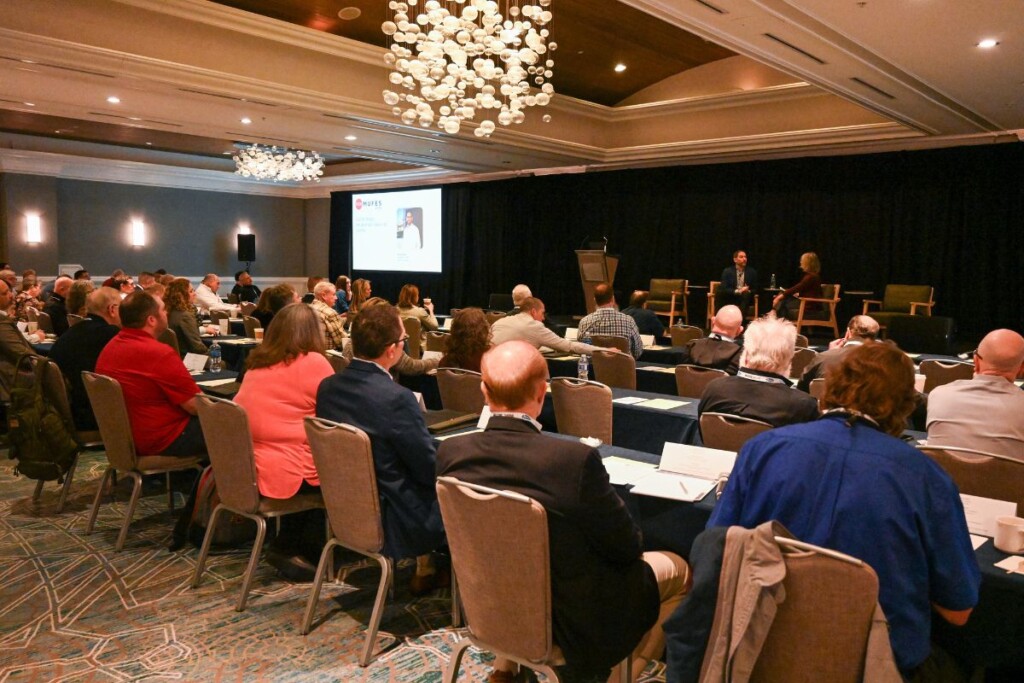
Automation, energy efficiency, kitchen design and equipment maintenance mark a sampling of topics covered during FER’s Multiunit Foodservice Equipment Symposium, which took place last week in Clearwater Beach, Fla. The annual event aims to provide advanced education to foodservice equipment and supplies specifiers at multiunit restaurant brands and noncommercial foodservice facilities. Takeaways from the event include the following:
Smart additions can go a long way. Keynote speaker Michael Keller, of Jeremiah’s Italian Ice, shared the good and the bad of the 160-unit brand’s growth journey. One important addition, he says, was a franchisee advisory council to keep satisfaction and challenges in perspective. On the menu side, recognizing dessert as a “discretionary purchase” in an unusual economy, the brand recently added two items: special-occasion-geared ice cream cakes—for which DoorDash purchased display freezers in a 2025 partnership—and the value-minded Tadpole Mini, a 5-oz. serving of Italian ice for $3. “A family of five can get in and out of Jeremiah’s for $15, which is pretty good for a discretionary purchase,” he says.
Strengthen connections with utility companies, so foodservice doesn’t take a back seat as AI and data centers become the focus. “Operators need to get involved in events like the (Edison Electric Institute) National Key Accounts Workshop and (Energy Solutions Center) Blue Flame Alliance; they need to show up, state their concerns and get help from the utilities,” says Richard Young, of Frontier Energy and the Food Service Tech Center, during a presentation on electrification and decarbonization. “They need to let the utilities companies know that foodservice is a tough business and demand the customer service they require.”
“You can get significant decarbonization just by going to efficient gas equipment,” shares David Zabrowski, of Frontier Energy and the FSTC. Meanwhile, there also are good reasons to go electric. Ultimately, three criteria are important in choosing an appliance: energy costs, the appropriateness of the tool for the job, and the equipment’s performance/recovery. Operators can find efficiency calculators, energy savings calculators and more at caenergywise.com/calculators.
After every boil notice event, flush lines, replace water filters and clean the equipment, such as ice machines, before restarting. “Have proper boil notice (standard operating procedures) in place,” says Nathan Miller, of Coastline Cooling, who was joined by James Miller for a session on improving water quality. If missed, biofilm could form in the water filter, making it a source of contamination, causing health and safety issues, equipment failure, and other problems. In the southwest region, James says, water events are more common than not because of hurricanes.
The rise of online ordering and takeout, plus lower buildout costs, mark a few reasons Huey Magoo’s introduced a condensed store prototype in 2025. Reflecting on the benefits of shaking up a store design, the brand’s Matt Armstrong says, “We try to listen to the guest and how they want to consume their food, and listen to how our franchisees want to invest their money. If you can get both of those right, I think you’re well on your way to success.” Lee Berger of Ascent Hospitality Management and Ken Schwartz of SSA Foodservice Design + Consulting also participated on the panel, focused on design lessons learned.
People are still prioritizing going out to eat. Consumers call dining out “an essential part of their lifestyle,” despite an uncertain economic environment, says Chad Moutray, of the National Restaurant Association. “I see (the Growth Domestic Product Forecast growing at) around 2.8% in 2026, with inflation continuing to moderate, but not quite back to where the Fed might like,” he says. The gap between grocery and menu prices—up 2.4% vs. 4.1% year-over-year, respectively in December 2025—as well as labor costs mark a few persistent challenges.
Applicable automation looks different for every brand. For Cracker Barrel, Cha Nye Farley says automating processes for inventory counts, scheduling and service have simplified operations while maintaining scratch cooking. At Little Caesars, additions like a sauce portioning pump and a hydraulic dough divider have freed up staff from repetitive tasks, says Eric Brasseur. Richard Eisenbarth, of Cini-Little, also participated on the automation-geared panel.
Consider taking small steps when starting a predictive maintenance program. A PdM program serves as a maintenance strategy that predicts when equipment is likely to fail; it’s different from reactive and planned maintenance. “Not every organization is going to spend all the money in the world,” says Mike Snyder, of the Aligned Solution Group. “Take the most critical assets you have in your operations, the ones you can’t live without, and maybe start with those.” Snyder adds that a successful program is a team sport; everyone—operations, facilities, procurement and finance—needs to be involved to make it work.
A mutual and transparent understanding of supply chain headwinds for suppliers and operators alike is necessary to the bottom line. Tiffany Vassos, of Dave’s Hot Chicken, notes that her brand aims for a two-year ROI for franchisees, so regulation implications and costs increases are something to which the rapidly growing brand is particularly sensitive. Vassos also says she connects weekly with the brand’s suppliers. Phil Kafarakis, of IFMA, moderated the supply chain discussion, which also included Sean Cusick, of Freddy’s Frozen Custard & Steakburgers.
For more photos of MUFES 2026, visit the media gallery HERE. Plus, stay tuned for the dates of MUFES 2027.
RELATED CONTENT
- Advertisement -
- Advertisement -
- Advertisement -
TRENDING NOW
- Advertisement -
- Advertisement -
- Advertisement -