
Finding Filtration for Steam-Cooking Equipment
Water filtration system manufacturers spill on what gets missed and misunderstood when it comes to solutions for steam-cooking equipment.

You may have heard the old adage, “What you don’t know can’t hurt you,” but this sentiment just doesn’t apply when it comes to your water supply. What you don’t know—and can’t see, for that matter—in your water could end up causing costly damage to valuable equipment such as steamers and combi ovens, either from corrosive salts or minerals that cause scale to build over time. Thankfully, water filtration systems are specifically designed to pair with these types of cooking equipment and remove potentially harmful elements before they can wreak havoc.
Because water quality differs by geographic region and equipment manufacturers have varying thresholds for what’s recommended, making the right decision can feel less than clear-cut. We talked to the major players in this category to help make the process of specifying a water filtration system for steam-powered equipment slightly less murky.
START WITH TESTING
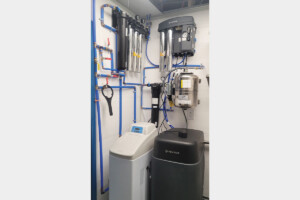
Chlorides are typically best removed with RO systems, suggests one manufacturer. Courtesy of Pentair.
The process of selecting a filtration system starts with testing your water, which is necessary even if you’ve tested in years past. “Water is constantly changing,” says one manufacturer. “No matter where you are, all around the country we are seeing water qualify shift, sometimes for better, sometimes for worse. A solution that worked three or five years ago may not be the best choice anymore.” Signs of diminished water quality—like scale, corrosion, or bad taste or odor—indicate it’s a good time to retest.
Depending on your geographic area, your water supply may have varying levels of minerals such as iron, zinc, calcium and magnesium—this is what’s known as the water’s hardness, or total dissolved solids. “You want to test for hardness, specifically temporary hardness that will leave behind mineral deposits that will not only clog up a machine but make it less efficient,” says one manufacturer. “The equipment won’t perform as well as when it’s new, and it will be more expensive to operate.”
There also are many Cs to consider: chlorine, chloramines and chlorides. Municipalities disinfect water by adding chlorine and chloramines, while chlorides make their way into the water supply as a result of runoff from roadways that are salted during snowy and icy weather. All three can corrode equipment’s stainless components.
Maintenance can help, but some damage from these elements is permanent. “Scale (from TDS) can often be removed during a deliming cleaning process; however, corrosion of the stainless steel cannot be reversed,” says one manufacturer. Another maker adds, “In combis, when the water gets to a boiling point and turns to steam, chlorides can damage a machine within a year. We’ve seen failures within three to four months, even. Most manufacturers now have guidelines for the limits of chlorides in water because it’s become such a problem.”
There are two main types of filtration systems for cooking equipment like steamers and combis: reverse osmosis systems or carbon-based cartridge filters. “Filtration has had to advance as combi equipment has become more efficient and more sensitive to water quality,” says one maker. “Water quality requirements (to remain within warranty) have tightened, which means filtration systems now need to do a better job of reducing minerals and chemicals that can lead to equipment corrosion and scale buildup.”
SELECTING A SYSTEM
Once you know what’s in your water and the manufacturer-provided thresholds recommended for your equipment, you can figure out what system you need. “(One particular combi manufacturer) is very proud of the fact that because of the quality of their equipment they have higher allowable levels of chlorides than almost anyone else,” says one maker. “So, it’s important to know what your target is.”
If your chlorides are out of spec, you’ll need an RO system. If not, a cartridge system could be sufficient and most cost-effective. “There are some filters that remove chlorides, but generally speaking it’s best done with RO systems,” says one maker of cartridge-based systems. “RO systems are expensive both to purchase and maintain, however they do deliver, when properly maintained, the most consistent water. With cartridges, we do see peaks and valleys.”
Cartridges can be a good fit in the central and southern U.S., where chlorides are less common due to lack of snowfall. “We make a filter that is specifically targeted toward steam equipment that removes chloramine and hardness along with chlorine,” says a manufacturer. “It will make sure the water tastes great and that equipment is protected from mineral buildup and chloramine breakdowns.”
In today’s market, filtration manufacturers are competing most on efficiency and footprint. “(Operators want) high-efficiency systems that take up less space in the facility,” one manufacturer says. “Real estate in the back room of a restaurant is valuable.” Filtration capacity and life of service are other differentiating factors. “Certifications (also) matter—especially the difference between products that are NSF-certified and those that only claim to meet the NSF standards doing their own testing,” they say.
PITFALLS TO AVOID
Though testing your water is the top recommendation from water filtration manufacturers, it’s also the advice that’s most often ignored. “Always, always test your water first,” says one manufacturer. “It’s often overlooked and I can’t overstate the importance.”
Also, don’t rely on recommendations from industry peers, especially if they’re not in your immediate region. “There is no one-size-fits-all solution with filtration because the water is different everywhere,” one maker says.
Choosing the cheapest option rather than the best option is another common mistake. “They purchase a $40,000 combi and either use no filtration or the wrong filtration technology,” one manufacturer says. One example might be forgoing an RO system due to the expense, even when water testing and equipment requirements indicate it’s the best option.
On the flip side, defaulting to a RO system when your local water quality doesn’t necessitate one can also be a pricey mistake. “Some of the larger RO systems are well in excess of $5,000 … even up to $15,000. Not only is it expensive for the purchase and ongoing maintenance, but there are environmental impacts as well because ROs send some water down the drain,” says a manufacturer. “You don’t want to have your water bill be unnecessarily high for a system you don’t need.” This can be a concern in areas, where water cost is especially high, such as some parts of the West Coast.
![HF195 CLX OP Center[1]](https://www.fermag.com/wp-content/uploads/2026/06/HF195-CLX_OP_Center1.jpg "HF195 CLX OP Center[1]")
Forgetting to change filters is a common mistake with cartridge-based systems. Courtesy of 3M, from Aqua-Pure Water Filtration.
With a cartridge-based system, forgetting to change filters is the No. 1 mistake operators make. “(We) sell a digital flow meter that tells you how much capacity remains so you can really drive the maximum cost-benefit from that cartridge,” one manufacturer says. “That way you’re not changing it prematurely and you’re not forgetting about it and letting it go a few years without realizing it.” Some combi manufacturers have incorporated a filter reminder in their software. “If that option exists in your equipment, set it. It’s worth the extra five minutes of time to protect that large monetary investment,” they say.
Systemic Change
Manufacturers share four steps to take when replacing your cooking equipments’ water filtration system(s).
1. Take a look at your current equipment and visually inspect it. Do you see any corrosion or scale problems?
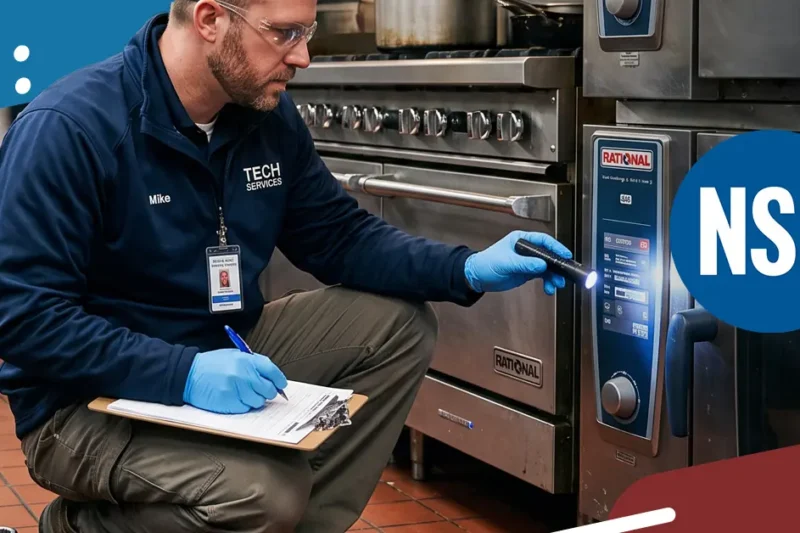
2. Send a water sample to a third-party lab for testing. If you have multiple locations, you need to test the water at each individual building to get a clear idea of the contents of your water coming from your local municipality.
3. Compare the test results with the written water specification for your existing or chosen equipment. “We would call this the gap-analysis,” says one manufacturer.
4. Speak with a water expert from your dealer, distributor or manufacturer to determine the right filtration solution.
Filter Facets
Take a look at three water filtration systems intended for steam-cooking applications.
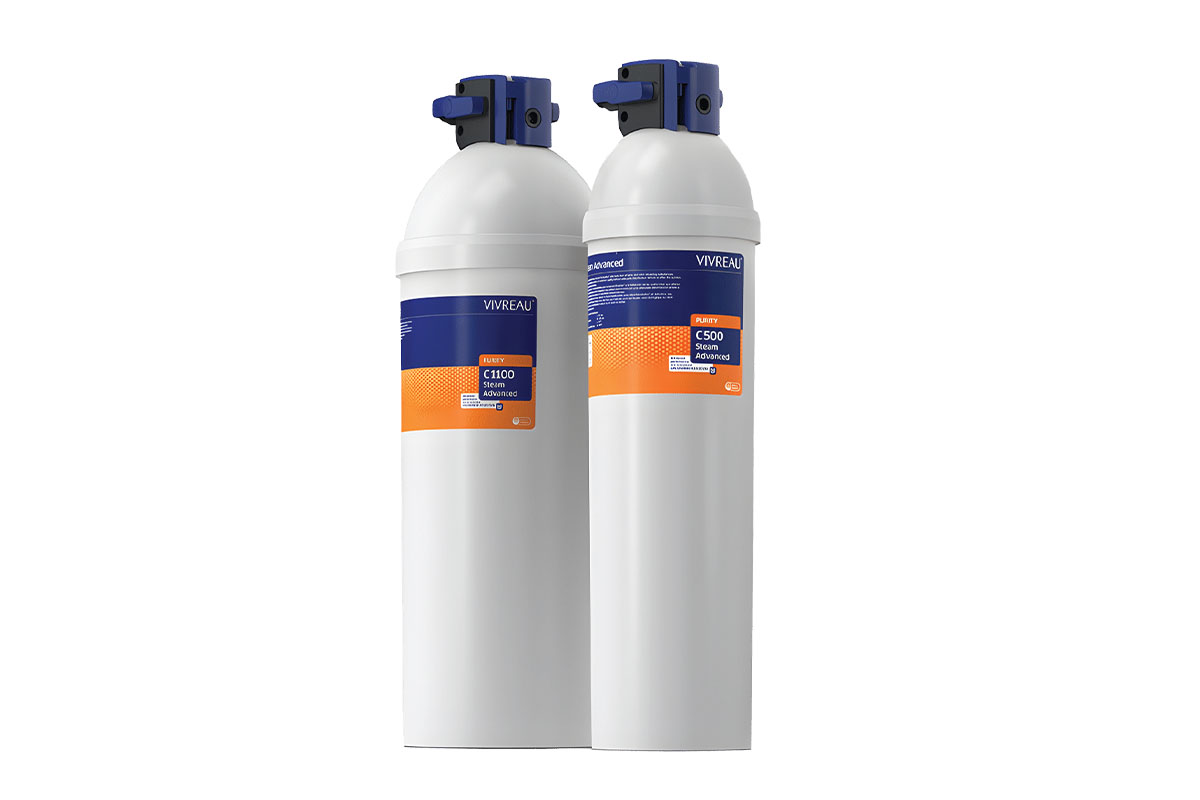
Vivreau
Model: Purity C Steam Advanced
Details: Reduce chloramine concentration by up to 80% with this carbon-based cartridge filter system, which is compatible with small to medium-sized combis. Four-step filtration removes coarse and fine particles as well as taste-impacting substances, plus prevents limescale formation. Choose from two capacities: 1,235 gal. (C500) or 2,089 gal. (C1100).
Website: vivreau.com
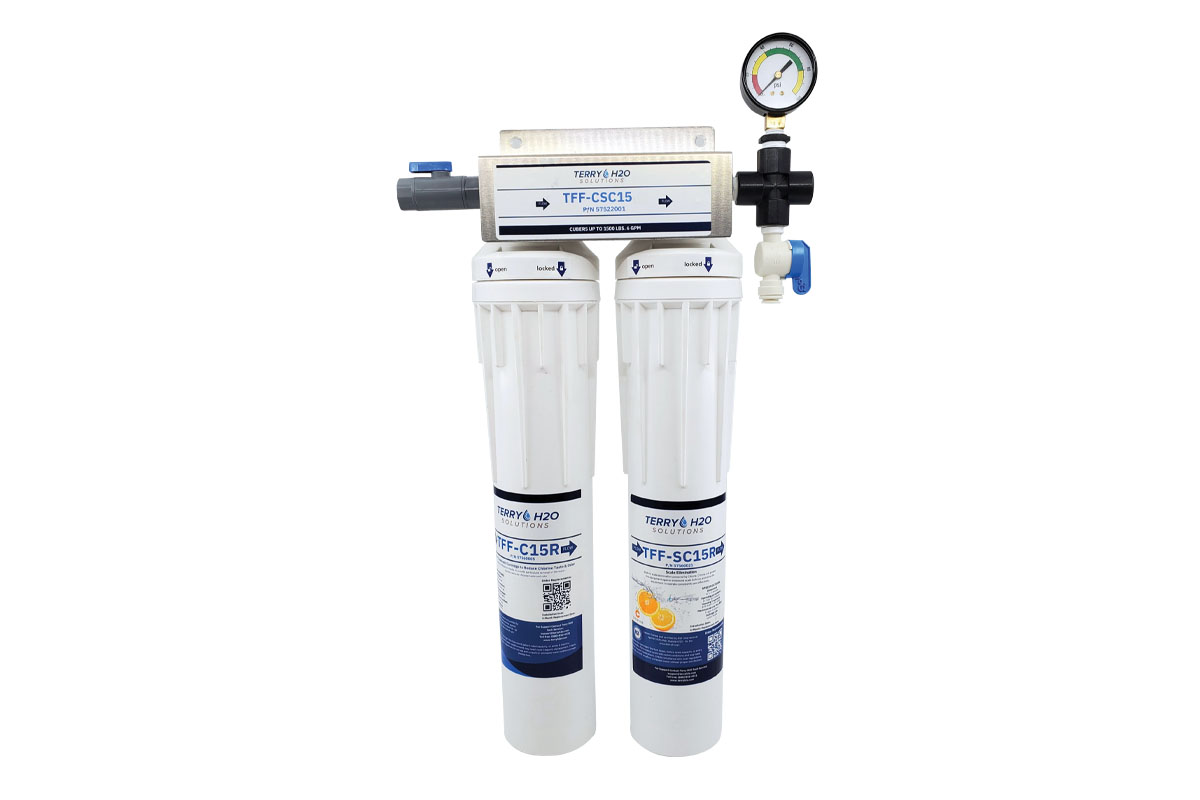
Terry H2O
Model: Fast Fit Series (TFF-CSC15)
Details: Compatible with single-compartment steamer or combis, this model uses activated carbon to reduce corrosion, bad tastes and odors. The system, with a flow rate of 2 gal. per minute, filters to 1 micron, while the maker’s food grade, biodegradable formulation eliminates and prevents scale buildup.
Website: terryh2o.com
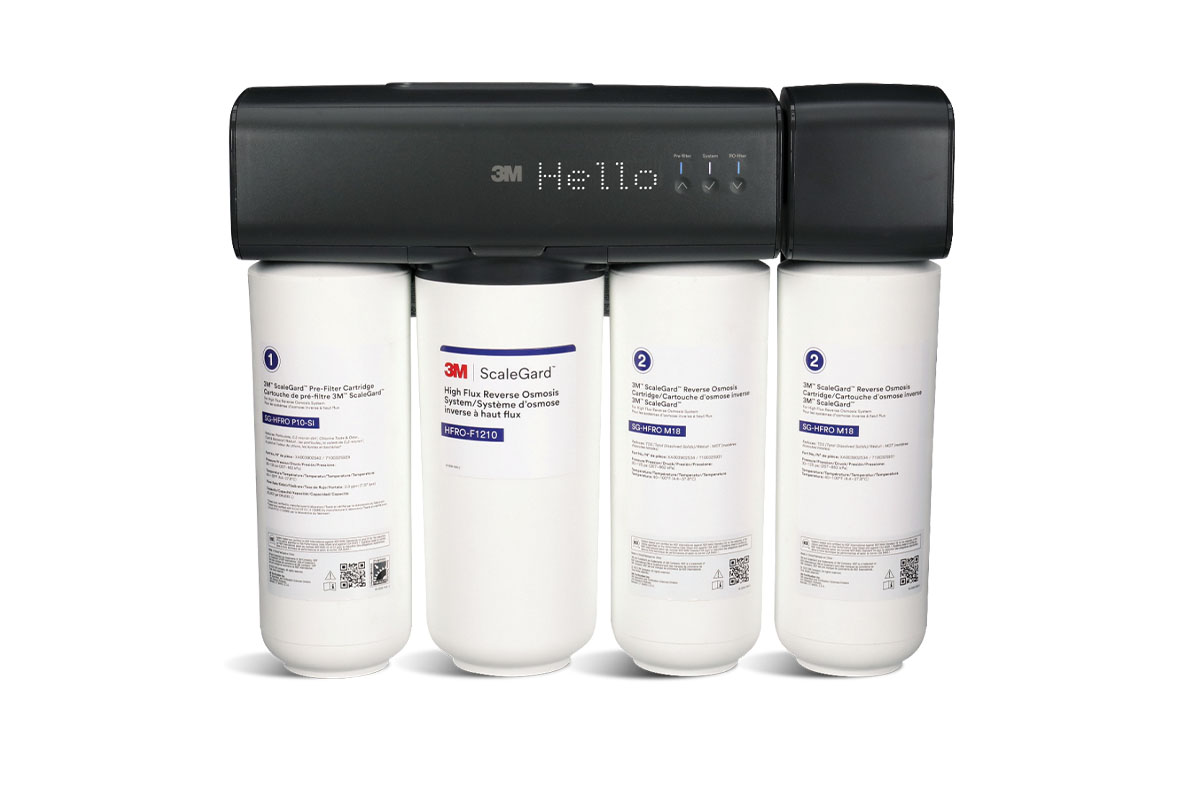
3M, from Aqua-Pure Water Filtration
Model: ScaleGard High Flux Reverse Osmosis System
Details: This wall-mountable system boasts a compact size at 14-in.W x 6-in.D x 16-in.H. as well as 77% water efficiency. Choose from two base models—one delivering 800 gal. per day or two cartridges for 1,200 gal. per day.
Website: solventum.com
Editor’s note: All featured products have been released or updated since The NAFEM Show 2023.
ABOUT THE AUTHOR

RELATED CONTENT
- Advertisement -
- Advertisement -
- Advertisement -
TRENDING NOW
- Advertisement -
- Advertisement -
- Advertisement -