
SPONSORED CONTENT
Managing Peak Season Service Demand: On-Call Rotations & Overtime Control
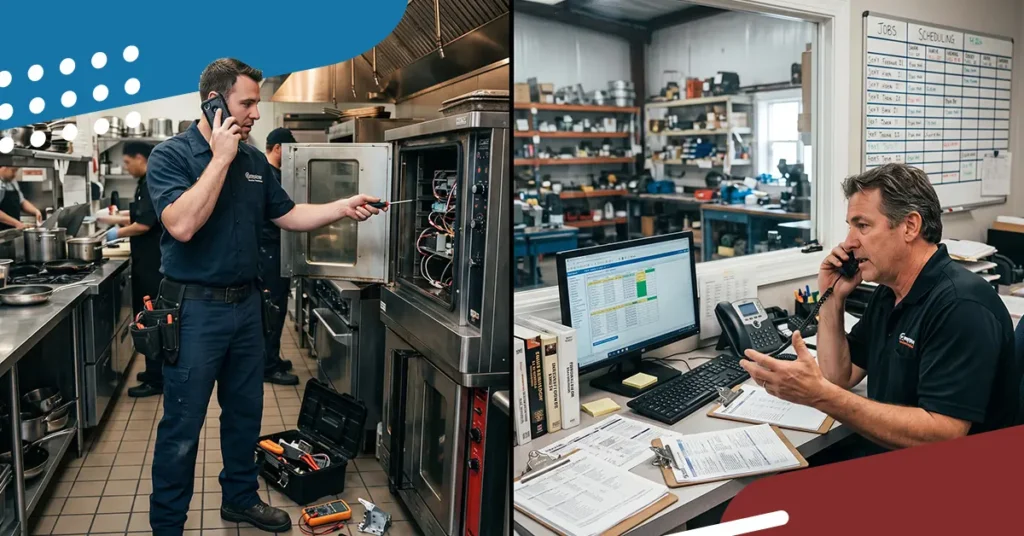
For commercial foodservice service agencies, Q4 holiday volume can bring a predictable increase in emergency calls, after-hours requests, and compressed repair timelines. Without a clear plan for staffing and dispatch, the surge can contribute to technician fatigue, rising overtime costs, and inconsistent response times.
Service managers and operations leaders can prepare by:
- Building predictable primary and backup on-call rotations.
- Establishing clear triage criteria to keep non-critical calls out of emergency dispatch.
- Aligning truck-stock replenishment and parts staging with seasonal repair demand to reduce unnecessary travel and repeat trips.
The Operational Strain of Peak Season
 In commercial kitchen service, the final quarter of the year concentrates operating stress across both customer kitchens and field service fleets. From late autumn through New Year’s Day, restaurants, catering facilities, and institutional foodservice operations run cooking lines at peak capacity. Increased duty cycles can accelerate wear on high-use components across fryers, ovens, refrigeration systems, and warewashing equipment.
For service providers, this operational spike drives high service-call volume into the dispatch queue. If a fleet relies on ad-hoc dispatching or pushes after-hours calls onto an informal rotation, two immediate problems emerge: escalating overtime burdens, and technician fatigure.
Unstructured evening and weekend dispatches compound labor expenses, quickly shrinking gross margins on fixed-rate or contract service accounts. On top of that, consecutive on-call weekends combined with heavy daytime routes can lead to technician exhaustion, increased callbacks, driving safety risks, and mid-season turnover.
Managing peak fixing season effectively requires shifting from reactive triage to planned service capacity before emergency volume peaks.
Structuring Balanced On-Call Rotations
A dependable on-call program balances rapid customer response with sustainable workloads for field staff. Relying on a single primary on-call technician across a high-volume territory frequently leads to missed calls or excessive overtime.
1. The Primary/Secondary Rotation Model
Instead of assigning a single technician to handle all after-hours emergency calls, high-performing service fleets often implement a dual-tier rotation:
- Primary On-Call Technician: Receives first dispatch notifications for verified emergency calls.
- Backup Technician: Engaged only when the primary technician is already active on a job site, or when a call requires a two-person safety lift or specialized technical competency (e.g., complex rack refrigeration or gas-combustion troubleshooting).
- Recovery Time Policies: If a technician runs calls late into the night, consider establishing defined recovery-time policies before assigning next-day routes, consistent with applicable labor rules and company policy. Morning priority dispatches can then be transferred to scheduled daytime peers.
 2. Rotational Frequency and Predictability
Publishing after-hours schedules 60 to 90 days in advance gives technicians visibility to plan personal commitments, which significantly reduces last-minute shift-trade friction:
- Avoid scheduling technicians for on-call duty immediately following planned vacation days.
- Limit on-call blocks to single weeks or split-weekend shifts (e.g., Friday evening through Monday morning) rather than extended multi-week assignments.
- Implement structured shift-swap logging in your field service management (FSM) system so dispatchers always have real-time visibility into who holds after-hours coverage.
Overtime Control: Implementing Dispatch Triage
Overtime costs often balloon not from unavoidable emergency work, but from dispatching technicians to non-critical issues that could have waited for regular business hours.
To control payroll expenses without degrading customer service, establish clear service-level agreement (SLA) classifications with customers and dispatch personnel:
| Severity Level | Operational Impact | Dispatch Criteria | Target Response |
|---|---|---|---|
| Priority 1: Emergency Line Down | Total loss of primary cooking or refrigeration asset with no backup (e.g., main walk-in down, entire fryer bank dead during service, active gas or water leak). | Immediate dispatch of Primary On-Call Technician. | Immediate call response; on-site per SLA terms. |
| Priority 2: Degraded Capacity | One vat down in a four-vat fryer bank, or secondary convection oven down with primary unit operating normally. | Offer operator immediate troubleshooting over phone; schedule for first-run morning dispatch at standard rates. | Next-day standard rate routing unless customer explicitly authorizes after-hours emergency rates. |
| Priority 3: Minor Maintenance & Cosmetics | Indicator light burned out, loose door handle, non-critical gasket tear, routine water filter change request. | Log into standard preventative maintenance or routing queue. | Next available scheduled maintenance window. |
Operational Check: Ensure customer-facing dispatchers or third-party answering services have explicit scripts to inform operators of premium emergency billable rates before rolling an after-hours truck. When operators realize a degraded unit incurs an emergency rate, non-essential calls frequently transition to standard morning appointments.
Connecting Labor Efficiency to Parts Availability
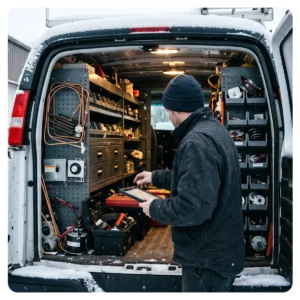 A technician who spends an hour driving to an unorganized shop or waiting for an emergency parts counter to open on a weekend generates overtime payroll with zero billable productivity. Overtime control is directly linked to inventory discipline:
- Stage Fast-Moving Wear Items Ahead of Peak Season: Review prior Q4 failure data to stock vans with critical wear parts—igniters, universal contactors, thermopiles, high-limits, and common water valves. When a technician has the required component on hand, after-hours jobs remain single-trip completions rather than multi-trip callbacks.
- Leverage Strategic OCM Sourcing: AllPoints OCM options save approximately 15% on average versus discounted OEM pricing, helping service operations carry broader truck-stock coverage without committing as much inventory capital on compatible, out-of-warranty equipment.
- Pre-Assemble Standard Emergency Kits: Create dedicated emergency kits (e.g., universal pilot kits, contactor packs, quick-connect gas hoses) staged at the central shop for fast restock during on-call turnovers.
Frequently Asked Questions
What are common ways service companies structure standby compensation?
On-call compensation structures vary widely. Some employers use standby stipends, minimum call-out guarantees, overtime rates, or combinations of these approaches. Employers should structure compensation according to applicable wage-and-hour requirements, employment agreements, and local market conditions.
How can a service manager prevent technician burnout during the Q4 rush?
Unpredictable schedules and insufficient recovery time can be major contributors to technician fatigue and burnout during peak periods. Beyond publishing rotations months in advance, managers should establish clear recovery windows following late-night calls, cross-train technicians across equipment types to widen the on-call labor pool, and ensure dispatchers actively screen calls to filter out non-emergencies.
Can preventative maintenance agreements help smooth out peak-season demand?
Yes. Proactive service agencies schedule preventative maintenance audits on high-demand kitchen equipment in late summer and early autumn. Addressing worn heating elements, pitted contactors, scaled probes, and marginal igniters before the holiday dining surge eliminates a significant percentage of preventable emergency weekend breakdowns.
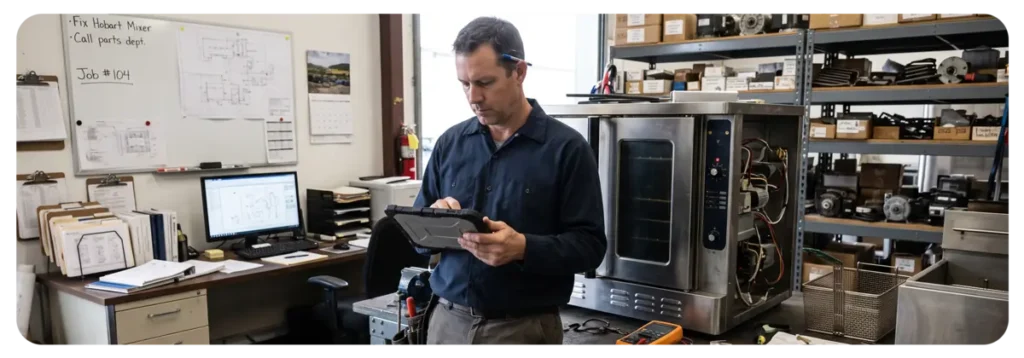
Strengthen Your Fleet Operations This Season
Balancing customer service with healthy operational margins requires disciplined dispatch triage, fair rotation structures, and strategic parts availability. Explore the AllPoints Parts Catalog and Technical Resources to equip your fleet with commonly needed OEM and OCM replacement parts, streamline truck stock, and keep commercial kitchens running efficiently through the busy season.
RELATED CONTENT
- Advertisement -
- Advertisement -
- Advertisement -
- Advertisement -
TRENDING NOW
- Advertisement -
- Advertisement -